
 电子邮件: info@guanyumixer.com
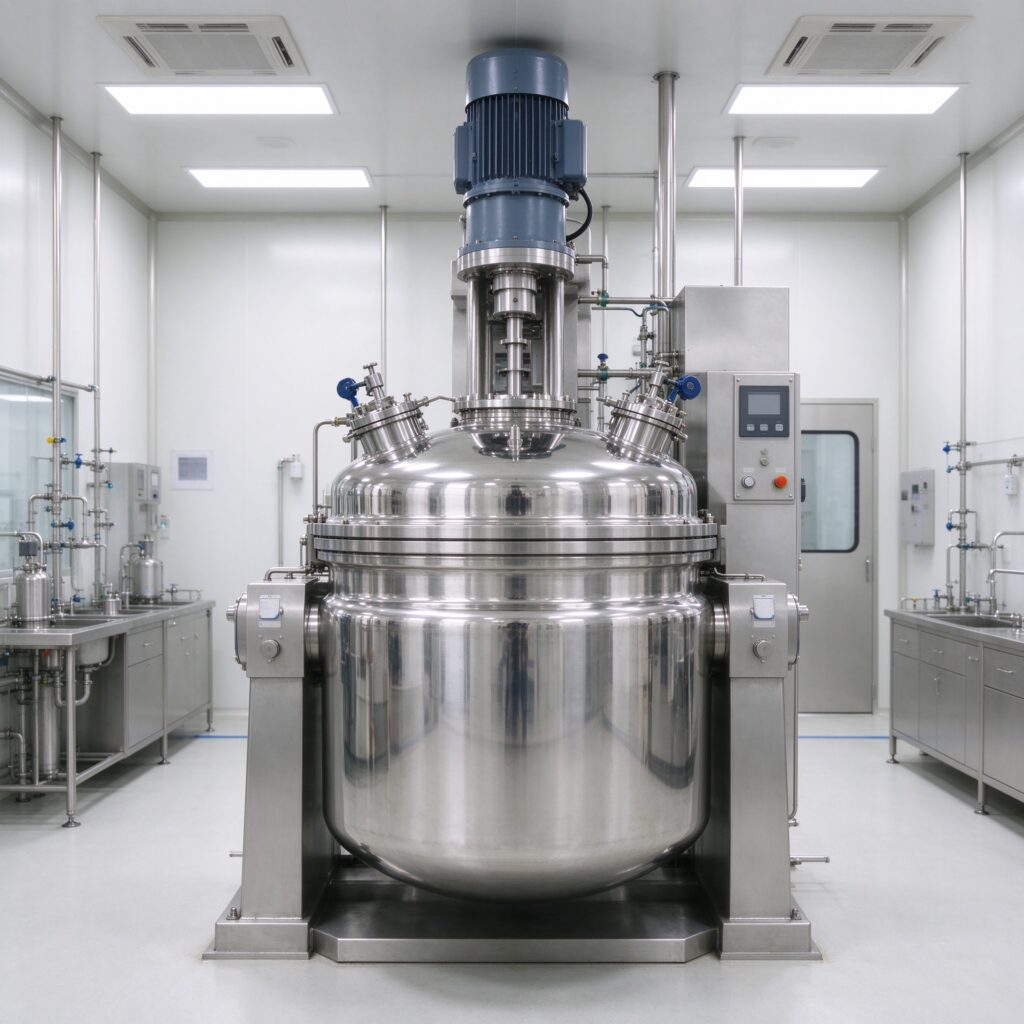
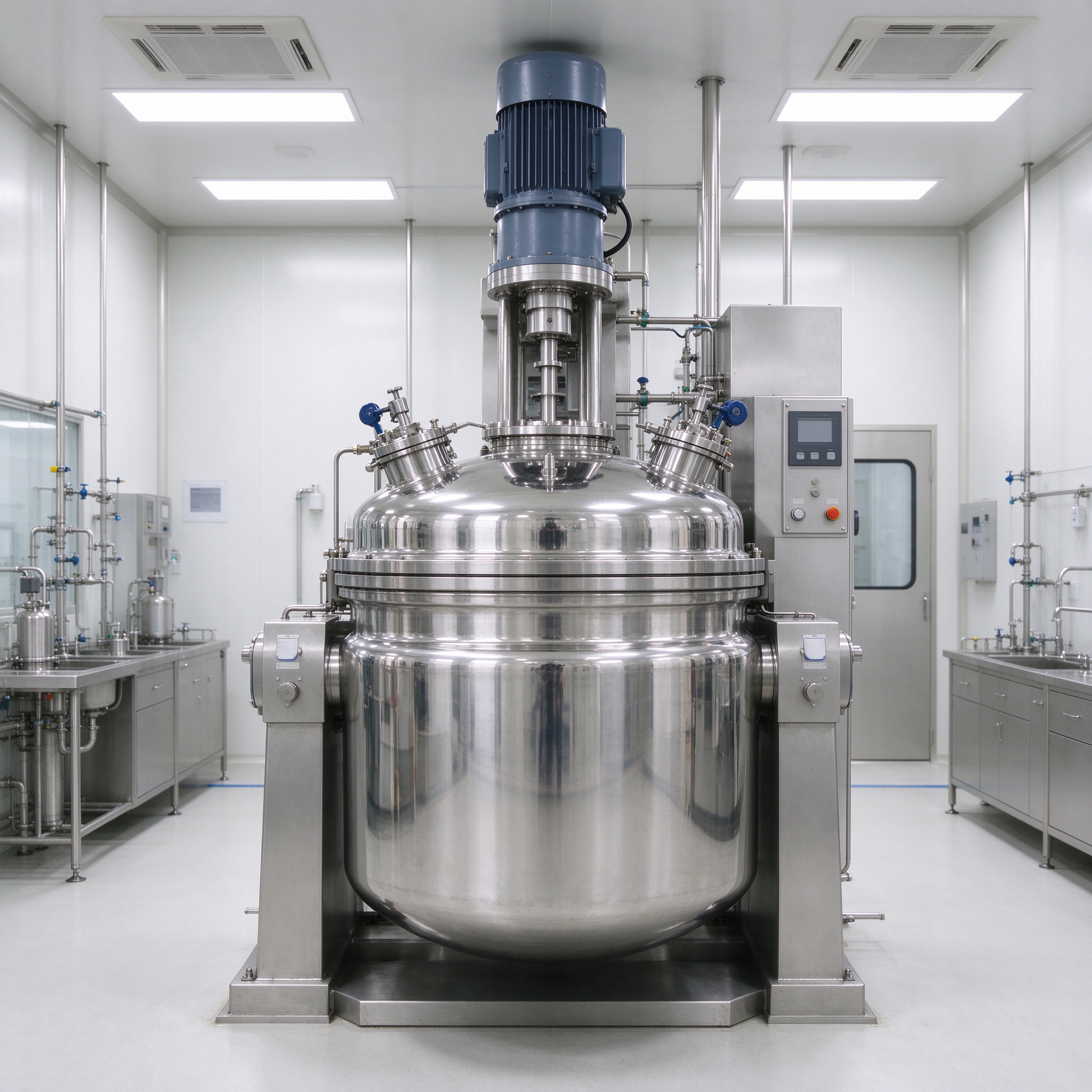
A skincare product is only as safe as the line that makes it. Regulators worldwide — the EU Cosmetics Regulation (欧共体 1223/2009), US FDA cGMP for cosmetics, ASEAN and GCC guidelines — expect cosmetic manufacturers to follow GMP principles for documentation, 设备, cleaning and traceability. Designing a GMP-compliant skincare production line means choosing equipment that supports those principles from day one, not retrofitting cleanability onto a generic mixer.
This guide explains what GMP expects from skincare equipment, which line elements matter most, and what buyers should verify when specifying a production line.
What GMP Actually Requires of Equipment
GMP for skincare is less about one magic certification and more about a system:
– Documented process. Every batch follows a written procedure; every deviation is recorded.
– Qualified equipment. 搅拌机, tanks and filling lines are installed, operated and maintained to written specifications.
– 可清洁性. Equipment can be cleaned and sanitized between batches without disassembly that introduces contamination.
– Traceability. Raw material lot numbers follow the product from weigh-up to finished batch.
– Controlled environment. Production areas are zoned, filtered and cleaned on schedule.
Equipment that is hard to clean, hard to inspect, or hard to document will make GMP certification harder, not easier.
The Core Line Elements for Skincare Production
A GMP skincare line typically includes:
1. Oil phase and water phase tanks. Heated, stirred, for preparing ingredients.
2. 真空乳化搅拌机. The heart of the line: 均质化, emulsifies and deaerates the product under vacuum.
3. CIP/SIP system. Clean-in-place and sanitize-in-place for vessels and piping.
4. Storage and buffer tanks. Intermediate and finished product holding.
5. Filling and sealing line. For jars, 瓶子, tubes or airless pumps.
6. Utility systems. Purified water, 压缩空气, 真空.
7. Batching and batching records. Digital or paper batch records tied to the line.
Equipment Design Choices That Support GMP
Material contact surfaces
– SUS316L for product contact, SUS304 for external
– Electropolished internal surfaces (Ra ≤ 0.6 µm recommended)
– No dead legs, no crevices, no horizontal welds that trap residue
– Clamp connections instead of threaded fittings for easy inspection
可清洁性
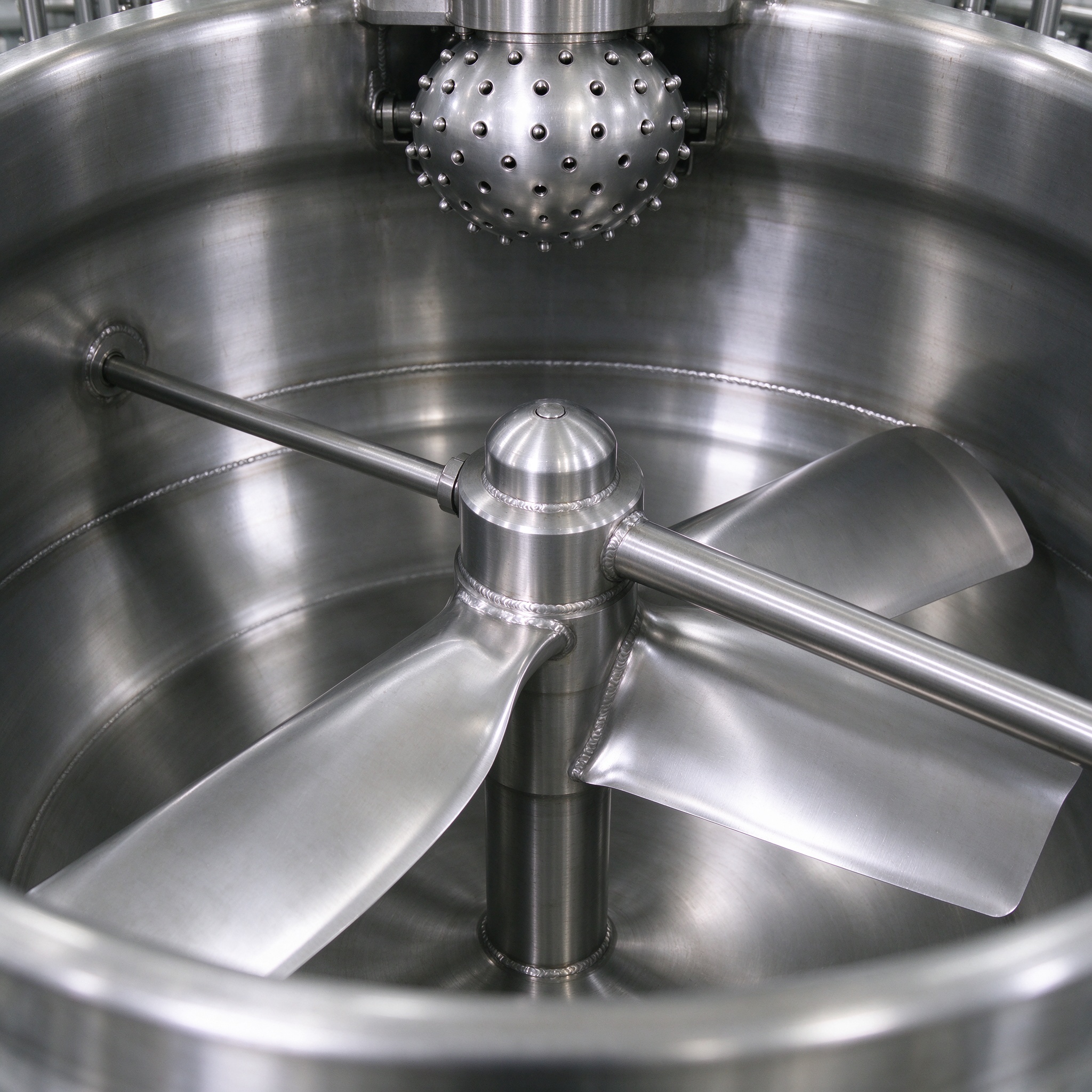
– Spray balls accessible from outside the vessel
– Sloped bottoms for complete drainage
– Sanitary valves (no pocketed ball valves)
– Sight glasses and CIP return lines
– Visual inspection ports
Vacuum and deaeration
护肤品 (面霜, 乳液, 血清) must be free of air bubbles for stability and shelf appearance. A GMP-grade emulsifier runs under vacuum (typically −0.08 to −0.09 MPa) during homogenization, 哪个:
– Removes entrapped air
– Reduces oxidation
– Produces smoother, 更稳定的乳液
Documentation support
– Equipment nameplate with unique asset ID
– Batch record fields printed on equipment (or in MES)
– Calibration tags on temperature, pressure and weight sensors
– Maintenance logbook tied to each asset
Common GMP Pitfalls in Equipment Choice
– Buying a generic chemical mixer without CIP access
– Choosing threaded or flanged connections that trap product
– Under-sizing the vacuum system so deaeration is incomplete
– Forgetting purified water treatment (a GMP line needs WFI or purified water)
– Not zoning the production area by product type (rinse-off vs leave-on)
Line Size and Scalability
GMP lines scale with batches:
– r&D and pilot: 5–50 L vacuum emulsifier
– Small commercial: 100–500 升
– Mid-scale: 500–2000 L
– High-volume: 2000 L+ with continuous supporting utilities
Design the line so pilot batches transfer directly to production scale without changing emulsifier geometry.
供应商审核清单
1. Does the supplier understand cosmetic GMP (ISO 22716 / EU 1223/2009)?
2. Are product contact surfaces SUS316L electropolished?
3. Is CIP / SIP built into the vessels?
4. Does the vacuum emulsifier run at −0.08 MPa or better?
5. Are connections sanitary (clamp, no dead legs)?
6. Can they supply the full line (坦克, 乳化剂, 填充, CIP, 水处理)?
7. What documentation is provided (MTRs, calibration, installation manual)?
8. Can they support GMP audit preparation with equipment documentation?
常问问题
问: Is a vacuum emulsifier required for GMP skincare production?
一个: Not legally mandatory, but nearly every commercial cream/lotion line uses one because it produces stable, bubble-free emulsions that meet shelf-life and appearance expectations.
问: What is the difference between GMP and ISO 22716?
一个: ISO 22716 is the international GMP standard for cosmetics; national regulators (EU, ASEAN, GCC) adopt or reference it. Equipment design supporting ISO 22716 supports most national GMP regimes.
问: Can a single line produce creams and serums?
一个: 是的, with thorough CIP between campaigns. Product-type zoning (rinse-off vs leave-on) is still required by GMP.
问: How long does a GMP-ready line take to install?
一个: Typical lead time is 2–4 months for a complete line, depending on size and automation level.
联系我们
For a GMP-ready skincare production line sized to your batch volumes, send us your product types (面霜, 乳液, 血清), target batch sizes, and filling formats. We will return a line layout with equipment list and documentation package. Reach us through the contact page or WhatsApp.