
 电子邮件: info@guanyumixer.com

Food Grade Mixing Tank Standards: Sanitary Design Requirements That Pass Audits
A food grade mixing tank is judged by one question: can it be cleaned completely, every batch, without fail? The answer is written into material grade, 表面光洁度, weld quality, geometry and documentation. This guide walks through the sanitary design requirements that auditors actually check, so you can specify a mixing tank that passes inspection instead of failing it.
Why Food Grade Standards Exist
Food products are processed in tanks that touch the product directly, and every product-contact surface is a potential contamination point. Standards such as 3-A Sanitary Standards and EHEDG guidance exist to define cleanable, drainable, non-reactive construction for food contact equipment. A tank built to these principles prevents bacteria harborage, product residue and foreign material risks that a standard industrial tank would carry.
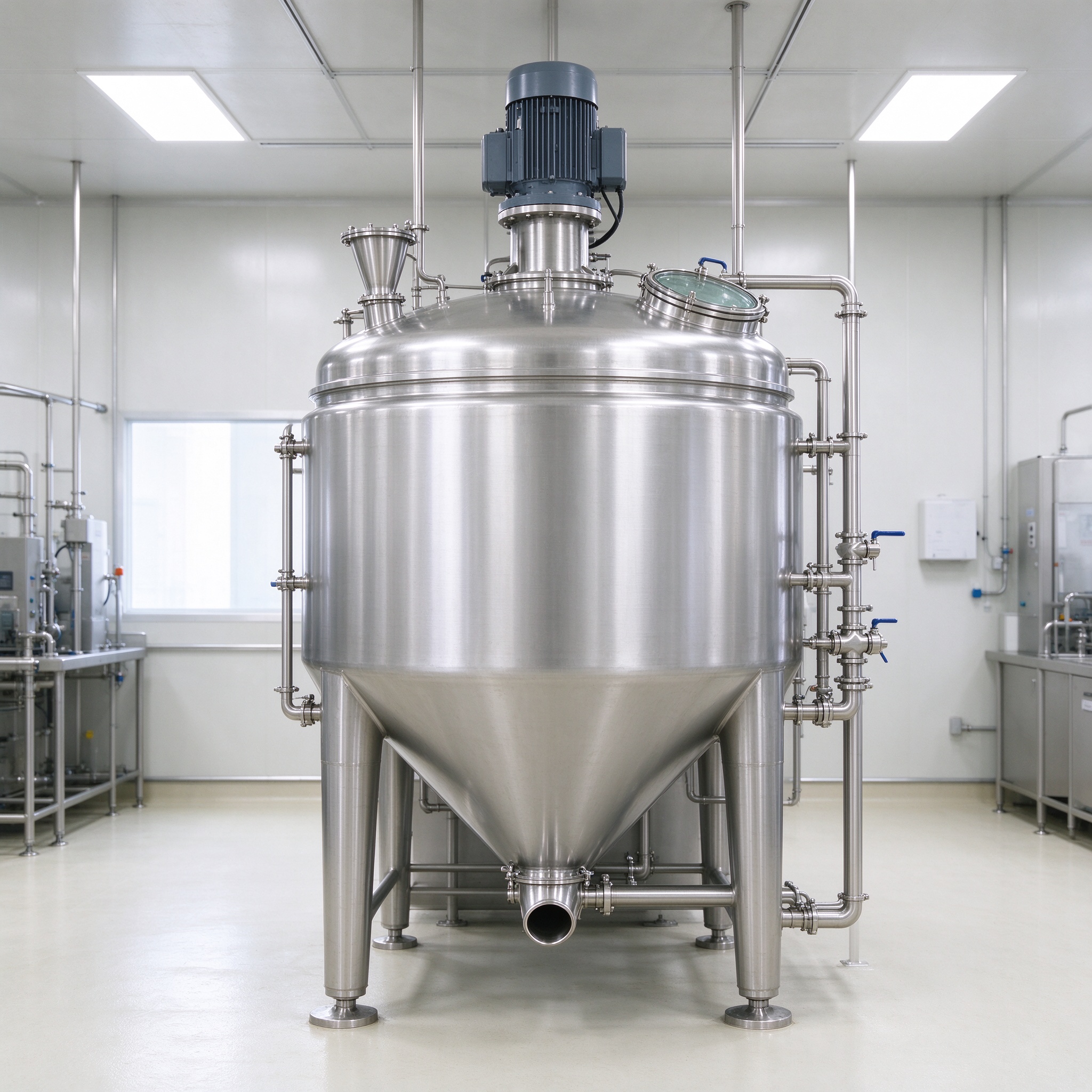
The commercial consequence is direct: if your tank does not meet the standard your customer’s audit requires, the equipment fails inspection and the order stops. Matching the standard to your market is part of the specification, not an afterthought. The material selection rules are detailed in our stainless steel storage tank guide.
Stainless Steel Grade: 304, 316L and When It Matters
The material grade defines how the tank surface behaves with your product. SUS304 stainless steel is the general food grade, suitable for water-based and mildly acidic products. SUS316L adds molybdenum, which improves corrosion resistance against chlorides, acids and salt, making it the preferred grade for acidic foods, 调味料, brines and pharmaceutical-adjacent processing.
The practical selection rule is chemical compatibility plus cleanability. If your product is acidic, salty or contains aggressive ingredients, 316L protects both the product and the tank surface from corrosion and leaching. The material certificate should trace the grade back to the mill for every batch.
表面饰面: The Ra Number That Protects Cleanability
Surface roughness is where food safety is won or lost. Product-contact surfaces should be polished to Ra 0.8 µm or better, and wet-processing applications often specify Ra 0.5 µm or finer. Smoother surfaces leave fewer anchor points for bacteria and clean faster and more completely.
Finish quality is visible in the weld zones, not just the flat sheets. A tank that is polished on the sheets but rough at the welds still harbors contamination, so the audit looks at transitions, welds and fittings with the same Ra requirement as the body.
Weld Quality and Crevice-Free Construction
Welds are the most common hidden defect in food tanks. Full-penetration, crevice-free welds with ground and polished surfaces eliminate the cracks where residue and bacteria collect. A poorly finished weld fails the cleanability requirement even when the material grade is correct.
The construction standard extends to every joint: tank-to-nozzle, jacket seams, brackets and supports. Interior fittings should be radiused, and any interior attachment that traps product is a design defect, not a detail.
Geometry: Drainage, Radiused Corners and Dead Legs
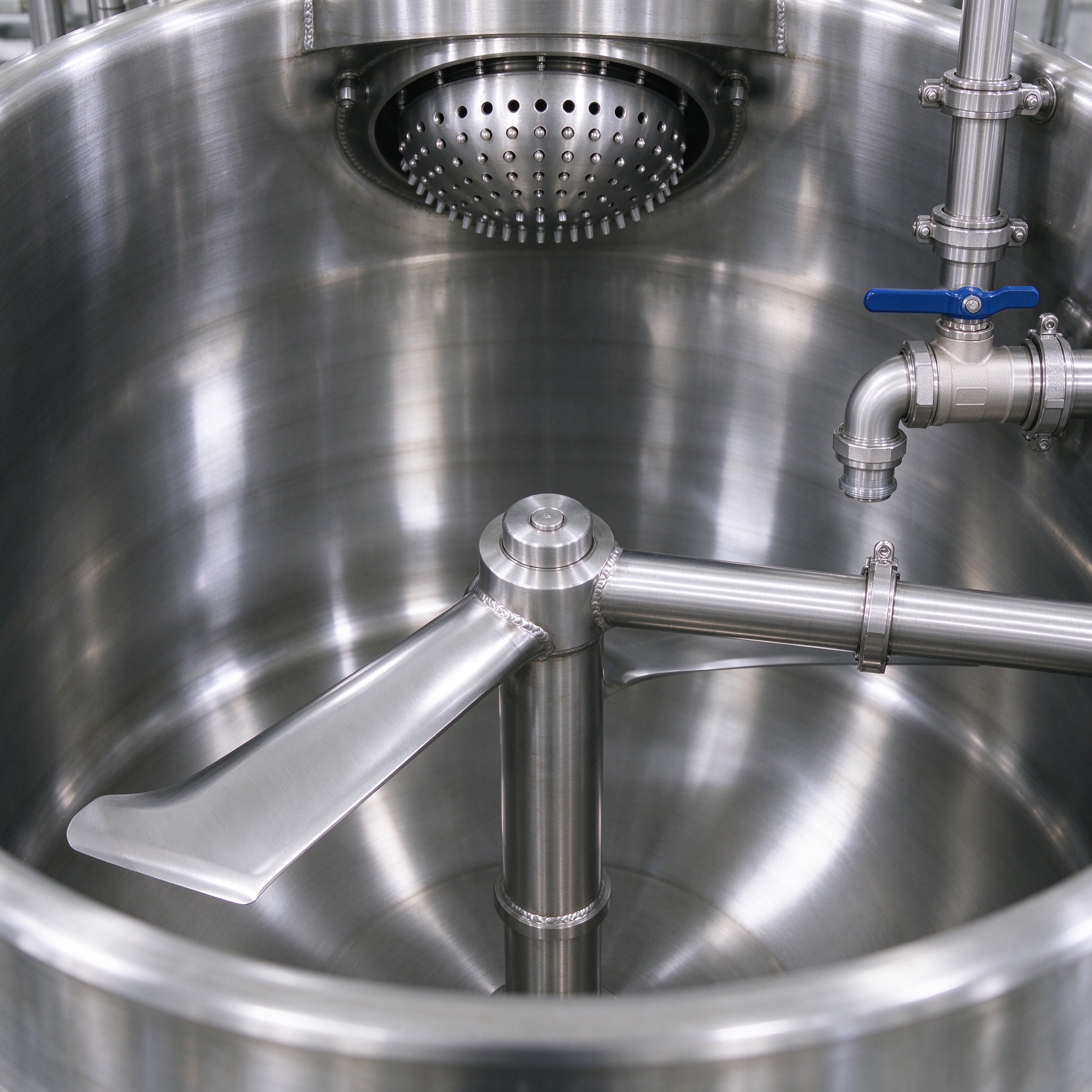
A sanitary tank drains completely. The bottom should slope toward the discharge with a minimum gradient, interior corners should be radiused so residue cannot pool, and there should be no horizontal ledges or pockets where product collects. Every interior feature has to be self-draining or cleanable in place.
Dead legs are the other classic failure. A dead leg is a section of pipe or fitting where product sits stagnant and never drains or cleans properly. Eliminating dead legs at the discharge, instrument connections and CIP connections is a core sanitary design rule, and auditors look for them specifically.
Gaskets, Seals and Contact Materials
The tank is not only stainless steel. Gaskets, seals and elastomers are product-contact materials too, and they must be food-grade, non-reactive and replaceable. The specification should cover the gasket material, its compliance documentation and the replacement interval, because a degraded gasket becomes a contamination and leak risk long before the steel does.
The same traceability applies to every contact material. If the audit asks for material documentation, you should be able to produce it for the steel, the gaskets, the lubricants and any surface treatment used in the tank.
CIP and SIP Compatibility
A food grade tank has to be cleanable in place. Clean-in-place systems spray, circulate and drain cleaning solutions through the tank without disassembly, and the tank geometry has to support the CIP flow: 喷雾覆盖范围, drainage, and connection points for the CIP circuit. Where the process requires sterilization, sterilize-in-place compatibility extends the requirement to steam or heat resistance.
CIP design is a geometry and connection decision, not a pump specification. The tank’s nozzles, slopes and interior surfaces determine whether the cleaning solution reaches every surface, which is why CIP compatibility is specified at design stage. The cleaning system requirements for production lines are covered in our CIP systems guide.
文档: Material Certificates and Compliance Files
The audit verifies what you can prove. A complete file covers mill certificates for the stainless steel, compliance documentation for gaskets and contact materials, weld inspection records and the surface finish verification. The documentation should trace every material and process claim the tank makes.
The difference between a food grade tank and a tank that looks food grade is the documentation. Specify the documents in the purchase order, and keep them with the equipment file for the life of the tank.
供应商审核清单: 8 Points for Food Grade Mixing Tanks
When you evaluate a food grade mixing tank supplier, verify these eight points. Each one maps to an audit failure if missing:
- 1. Stainless steel grade certificate: 304 or 316L with mill traceability.
- 2. Surface finish specification: 拉 0.8 µm or better on product-contact surfaces.
- 3. Weld quality standard: full-penetration, crevice-free, polished welds with records.
- 4. Drainage and corner geometry: self-draining slope, radiused corners, no dead legs.
- 5. Gasket and seal material compliance documentation.
- 6. CIP compatibility: 喷雾覆盖范围, nozzles and connection design.
- 7. Compliance references: 3-A Sanitary Standards and EHEDG guidance followed.
- 8. 售后支持: 安装, commissioning and lifetime service arrangement.
A supplier who can document these eight points is building to a standard; one who cannot is building to a photograph. Your audit is the filter.
常问问题: Food Grade Mixing Tank Standards
What standard does a food grade mixing tank need to meet?
The core references are 3-A Sanitary Standards for dairy and food contact equipment, EHEDG guidance for hygienic design, and material requirements such as FDA CFR 21 for food contact. The applicable set depends on your market and product.
Is SUS304 or SUS316L better for food tanks?
SUS304 suits general food and water-based products; SUS316L adds molybdenum for corrosion resistance and is preferred for acidic, salty or aggressive products. Select by chemical compatibility and cleanability.
What surface roughness is required for food contact surfaces?
Product-contact surfaces should be Ra 0.8 µm or better, with Ra 0.5 µm or finer recommended for wet processing. The finish requirement applies to welds and transitions too.
Why are dead legs a problem in sanitary tanks?
Dead legs trap product and cleaning fluid in stagnant pockets that cannot drain or clean completely, creating contamination risk. Sanitary design eliminates them at discharge, instrument and CIP connections.
What documents should I request with a food grade mixing tank?
Mill certificates for the steel, compliance documentation for gaskets and contact materials, weld inspection records, surface finish verification and the CIP design details.
联系我们
Specifying a food grade mixing tank and need the compliance documentation in place? Send us your product type, capacity and target market, and our engineering team will confirm the material grade, surface finish and sanitary design with a factory inspection video.
Refer to the 3-A Sanitary Standards organization for the official sanitary design criteria for food contact equipment.