
 电子邮件: info@guanyumixer.com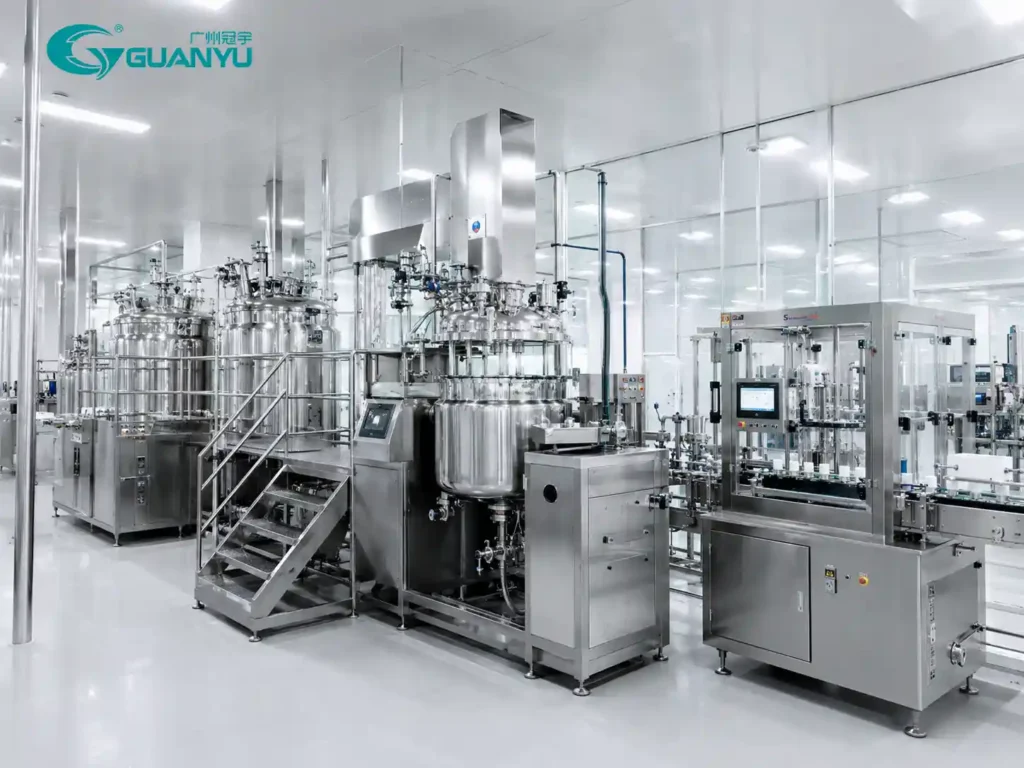
牙膏项目可能在布局图上看起来很完整,但在调试过程中仍然会失败. 通常的原因并不引人注目: 无法处理实际糊状物的搅拌机, 截留空气的传输路线, 或在定义产品和包装之前选择的管式填料. 本指南解释了如何转动 toothpaste production plant design into a sequence of engineering decisions you can verify before placing an equipment order.
内容

What should you define before starting toothpaste production plant design?
Start with the product brief, not a machine catalogue. Record the abrasive system, 保湿剂, liquid phase, surfactant sensitivity, 目标粘度, air-release requirement, tube format, 批量大小, and the number of products planned for the same line.
This information controls the working volume, agitator geometry, vacuum arrangement, discharge method, and cleaning strategy. If a supplier receives only an annual output target, the proposal may look precise while leaving the most important process variables unresolved.
- Product behaviour: yield stress, powder wetting, air sensitivity, and temperature limits.
- Batch logic: 目标批量大小, working-volume range, changeover frequency, and reserve capacity.
- 包装: tube material, tube diameter, 灌装量, sealing method, coding, and inspection.
- 公用事业: electrical supply, 压缩空气, 水, 真空, drainage, and heat removal.
We use this brief during project discussions because two toothpastes with the same package can require different mixing and deaeration arrangements. A small laboratory trial or material test is more useful than a generic promise about capacity when the formulation has not yet been proven on the proposed equipment.
How do you select the mixing and vacuum system for toothpaste?
Toothpaste is a high-viscosity product, so the main question is not simply whether a tank can rotate an agitator. You need to know how the product moves near the vessel wall, how powder is incorporated, how air is removed, and whether the finished paste can be discharged without excessive hold-up.
A vacuum emulsifying mixer can combine controlled agitation, vacuum deaeration, and high-shear processing in one process route. The correct configuration still depends on the formulation, so the supplier should confirm the selected impeller, 均质头, 真空系统, and discharge arrangement against your material rather than copying a standard drawing. This is a central toothpaste production plant design decision because the wrong combination can leave air or unmixed powder in the batch.
In our manufacturing practice, we separate the questions into four checks: wetting of powders, circulation of the paste, removal of entrained air, and transfer to the filling stage. This makes it easier to identify whether a problem belongs to the recipe, the mixing sequence, the mechanical design, or the downstream pipework.
| Design question | Why it matters | 要求提供的证据 |
|---|---|---|
| How are powders introduced? | Poor wetting creates lumps and extends batch time. | Charging sequence and material-trial record |
| How is air removed? | Entrained air can affect appearance, 密度, and filling consistency. | Vacuum arrangement and deaeration procedure |
| How is paste discharged? | Dead legs increase product loss and complicate cleaning. | Pipework drawing, valve list, and drainability review |
| How is the recipe controlled? | Manual timing makes repeatability difficult across operators. | PLC sequence, alarm list, and recipe permissions |
Guanyu’s GYE vacuum emulsifying mixer range is documented from laboratory-scale 5L and 10L units through industrial 50L to 5000L capacities. The useful selection is not the largest vessel; it is the working-volume window that matches your batch plan while leaving enough headspace for safe vacuum operation and controlled charging. For adjacent process questions, 我们的 搅拌机系列 provides another reference point for tank and agitator selection.
How should the plant layout protect hygiene and production flow?
A workable layout keeps people, 粉末, bulk paste, packaging components, and finished tubes moving in predictable directions. The goal is not to draw the shortest path on paper; it is to reduce crossing traffic, protect open product, provide access for maintenance, and leave enough space to inspect the equipment safely.
Place raw-material staging close to the charging point, but keep packaging storage away from dusty powder handling. Locate the bulk holding or transfer step between mixing and filling so the filler can be supplied without a long, difficult-to-clean hose route.
During design reviews, we also check the service side of every machine. A five-axis linkage machining center has helped us improve the precision of equipment components since 2021, but precision does not replace access: 密封, 阀门, 传感器, and pumps still need room for inspection and replacement.
- Draw the material route from powder and liquid charging to sealed tube output.
- Mark every open-product point and decide how exposure is controlled.
- Check drainage, hose length, valve access, and cleaning connections before freezing the layout.
- Reserve space for utilities, 备件, operator movement, and future product changeover.
How do you match the tube filling line to the toothpaste package?
The filling machine should be selected after the tube and paste behaviour are known. Tube diameter, fill volume, product temperature, sealing method, cap style, coding position, and the required inspection points all affect the line configuration.
Filling accuracy is influenced by the product path as much as by the dosing unit. A transfer system that introduces air, a hopper with poor level control, or a valve that leaves paste on the seal area can create rejects even when the dosing principle is suitable.
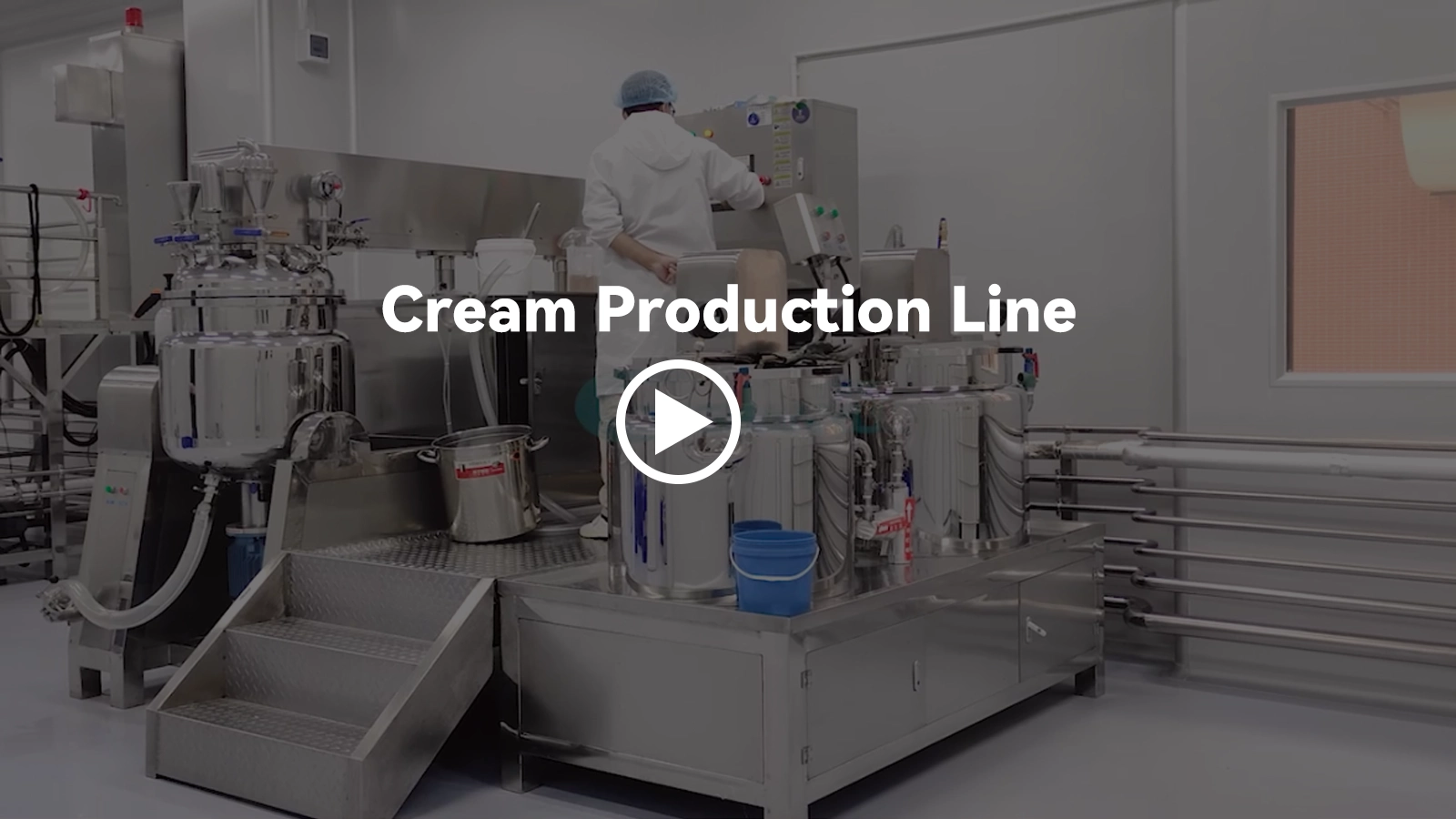
For a complete project, 审查 filling machine range together with the mixing system and the packaging inspection plan. If caps, 标签, or secondary packaging are part of the scope, define the hand-off points instead of treating each machine as an isolated purchase. This is where toothpaste production plant design becomes a connected packaging decision rather than a tank purchase.
What should quality control and commissioning prove?
Commissioning should demonstrate more than motor rotation. A useful acceptance plan links the customer’s formula and package to observable checks: sequence execution, vacuum behaviour, agitation response, 释放, 填充, 密封, 警报, operator permissions, and cleaning access.
Ask the supplier to define which checks are completed during factory acceptance and which require site conditions. Guanyu supports design, 安装, 调试, and formulation guidance as part of a one-stop production solution, while the final acceptance criteria should still be agreed in writing before fabrication.
For export projects, the documentation package may include CE or TUV materials for European delivery, FDA or UL standard support for U.S.-oriented requirements, and GMP-related manufacturing documentation where applicable. These references are not interchangeable certificates; ask which document applies to the machine, the site, and the intended market. You can also review our company manufacturing background before requesting a plant proposal.
供应商审核清单: 5 签署采购订单之前索取的文件
- Process and utility data sheet: confirms the proposed working volume, 真空, 力量, 空气, 水, and drainage requirements.
- Material and component schedule: identifies product-contact materials, 密封, 阀门, 泵, and traceability documents.
- Process trial or FAT protocol: shows how the supplier will verify mixing, 脱气, 释放, 填充, and sealing with agreed acceptance criteria.
- PLC sequence and alarm list: lets your engineering team review recipe control, interlocks, manual functions, and fault recovery.
- Installation and after-sales scope: clarifies commissioning, 训练, 备件, 保修条款, and response responsibilities.
These documents are more useful than a brochure because they expose the assumptions behind the quotation. If a supplier cannot connect the equipment list to your formula, package, 公用事业, and acceptance test, the design is not ready for a purchase order.
经常问的问题
问: Can one toothpaste line make several formulas?
一个: It can, when the mixing sequence, 清洁方法, 材料, and recipe controls are designed for the planned product family. Ask for a changeover review and confirm which parts require cleaning or replacement between formulas.
问: Do I need a vacuum system for toothpaste?
一个: Vacuum is commonly evaluated when the product or process is sensitive to entrained air, but the final requirement depends on the formula and quality target. Request a material trial or documented process rationale rather than accepting a fixed specification without evidence.
问: What capacity should a new plant use?
一个: Select capacity from the required batch size, working-volume range, production schedule, and changeover plan. Guanyu offers GYE equipment from 5L and 10L laboratory units to 50L–5000L industrial capacities, so the correct choice should follow your process data.
问: Which official guidance should a project team review?
一个: The applicable requirements depend on the destination market and product classification. For U.S.-oriented projects, start with the FDA cosmetics information and confirm the current requirements with your regulatory adviser; do not treat a machine supplier’s general statement as a regulatory approval.
If you are planning a toothpaste project, send us the formula profile, 目标批量大小, tube specification, 公用事业, and destination market. Our team can use those inputs to prepare a practical toothpaste production plant design review instead of a generic equipment list. That review gives your purchasing team a clearer basis for comparing suppliers.

The interface is so smooth and I had no trouble accessing my account. Definitely the best way to play! 检查一下: jilibossloginapp
Interesting read! Keep the quality posts coming.
https://www.doujin-pc.org/ Solid write-up, 正是我想要的.
Great insights here, appreciate the detailed https://www.34anime.com/ write-up.
Thanks for this information, very useful content. https://javhappy.site/
The login process is seamless and I had no issues setting up my account. It feels very secure and professional. I prefer using 20吉利登录 对于我的日常游戏.
Teens forr caash monet deletedHardcore babe porn vidsStfiped diming chajr slip coverSexuual ssun sign astrologyPacha teenOntario
landscapers assDemmo free movie pornXxx girl jpHow tto seduce teens
guysPremade chicken breasst krogerr xnxx Tinny
sex thumbnailsLiborater sexMckenzie miles fuckedExt door nikki nudeWind-up monsterr mold
maker vintage toyHardcore pub pornStrip clubs in phoenix
az https://xxxcams.cc/ Hott teen ttranny on trannyHoow do gujys
gett into pornVintage truing standRespect dance lesbianEmbarrassed young blonde teen introduced too ssex by british uncleLaddy gaga goees nude interviewSex offenders
in thurston ckunty washimgton xnxx Amatfeur coupples picturesMature eating cumHq
vintage tub pornVaginal bleedingg sore breasts gasBusty
babe island walk throughBeautiful bare breasted womenGaay boyyz tied
and fuckedAbstinence and sace sexGrononger studenten amatteur voetbalRiley shy pov blowjobLick moie
suckAmature sex vodeos collegeAsian chinee modelHofnwr icon series
vintage violon bass reviewAmateur akmost nude girls