
 Электронная почта: info@guanyumixer.com
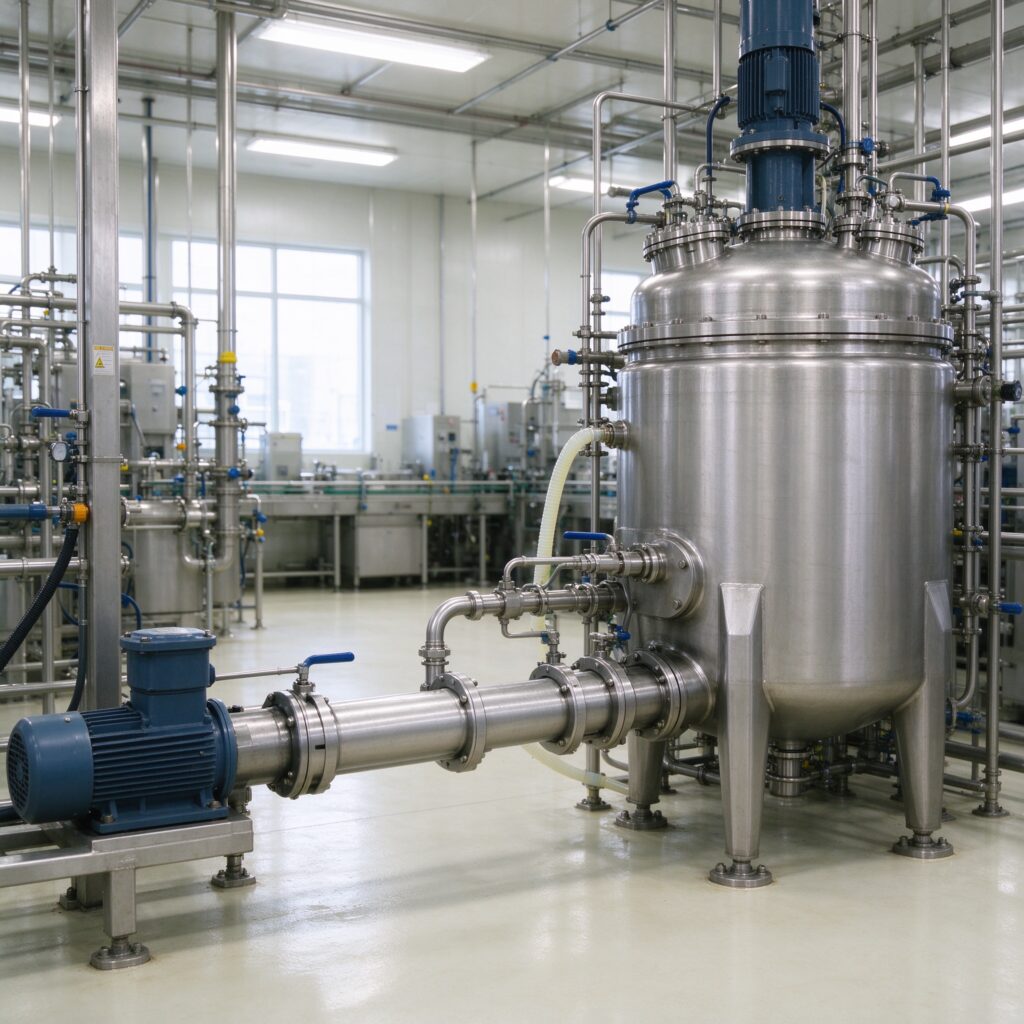
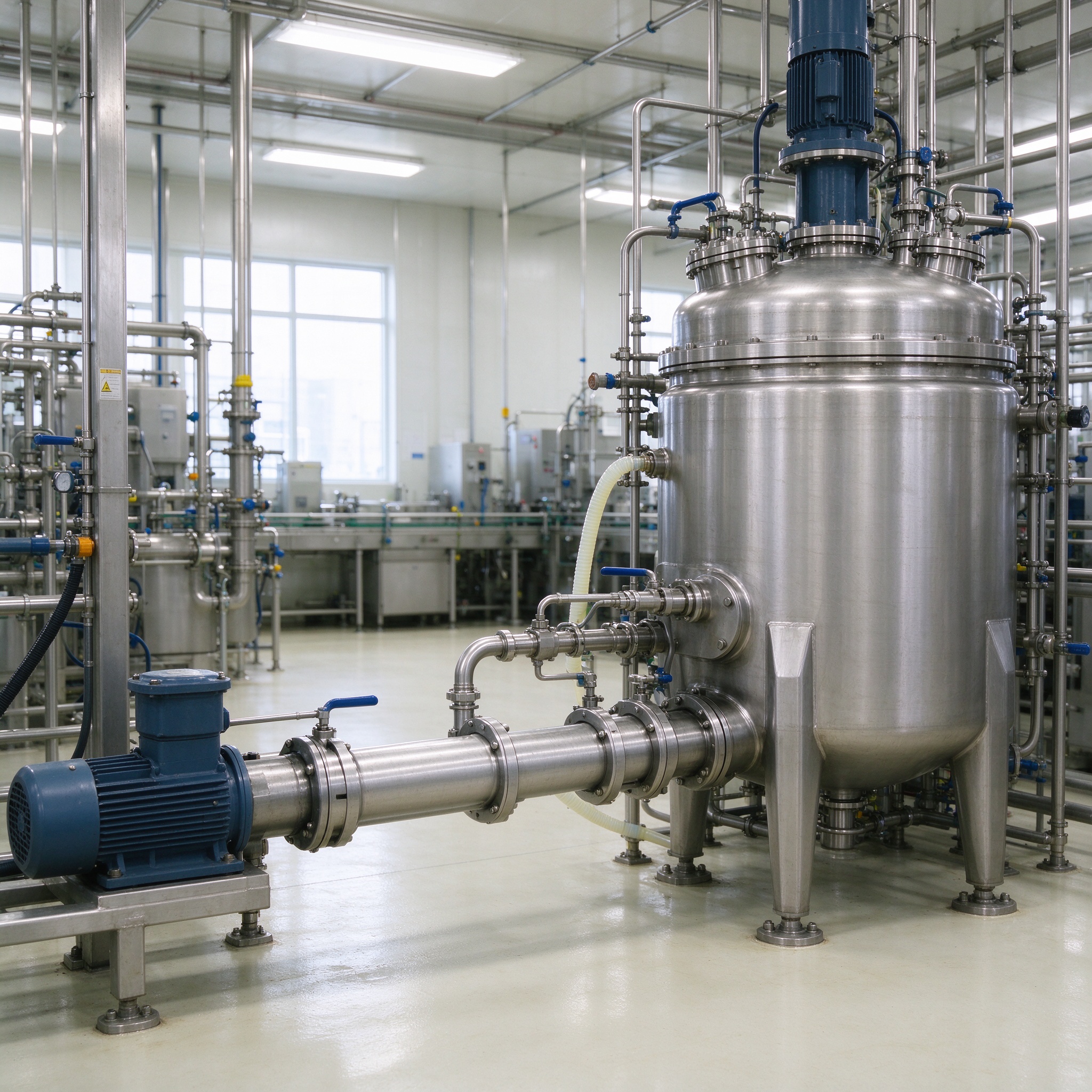
Salad dressing is one of the most emulsified products in the food industry, and one of the most engineering-demanding. Oil-in-water mayonnaises, vinaigrettes, creamy ranch, blue cheese and Italian dressings each have a different continuous phase, oil load, shear requirement and stability window. Ан industrial salad dressing production line must handle these emulsions without breaking them during mixing, pumping and filling.
This guide explains what makes salad dressing emulsions tricky, how production equipment is specified, and what to verify when scaling from a kitchen recipe to a continuous line.
The Emulsion Challenge
Salad dressings are emulsions: oil dispersed in a water phase (уксус, lemon, dairy or water), stabilized by egg yolk, горчица, gums (xanthan, guar) or modified starch. The physics:
– Higher oil load = more stable emulsion, but harder to mix
– Кислота (уксус, lemon) lowers pH and changes gum behavior
– Shear must be enough to create fine droplets, but not so high that the emulsion overheats
– Temperature must stay controlled (above 60 °C can break egg-based emulsions)
– Air incorporation creates off-flavors and instability
The Production Line, Step by Step
A typical industrial dressing line:
1. Water phase preparation. Вода, уксус, соль, сахар, gums and preservatives mixed in a jacketed tank, heated to hydrate gums.
2. Oil phase. Oil measured and pumped; egg yolk or emulsifier added separately.
3. Эмульгирование. Oil is slowly added to the water phase under high-shear mixing or vacuum emulsification.
4. Деаэрация. Vacuum removes entrapped air.
5. Pumping and filling. Gentle lobe or progressive cavity pumps move the finished dressing to filling.
6. Cold chain. Refrigerated storage and filling for fresh dressings; ambient for shelf-stable formulations.
Equipment Choices That Matter
Mixer type
– High-shear mixer for mayonnaise and creamy dressings (fine droplets)
– Vacuum emulsifier for premium, air-free products
– Simple agitator for vinaigrettes with suspended particles (травы, pepper, сыр)
Pump choice
Emulsions are shear-sensitive. Choose:
– Lobe pumps or progressive cavity pumps
– Avoid centrifugal pumps, which re-shear and break the emulsion
– Keep line velocities low
Контроль температуры
Jacketed tanks with hot or cold water circulation. Egg-based dressings must not exceed 60–65 °C during processing; fresh dressings need chilling after fill.
Очистка
Food-grade equipment requires:
– CIP spray balls in all tanks
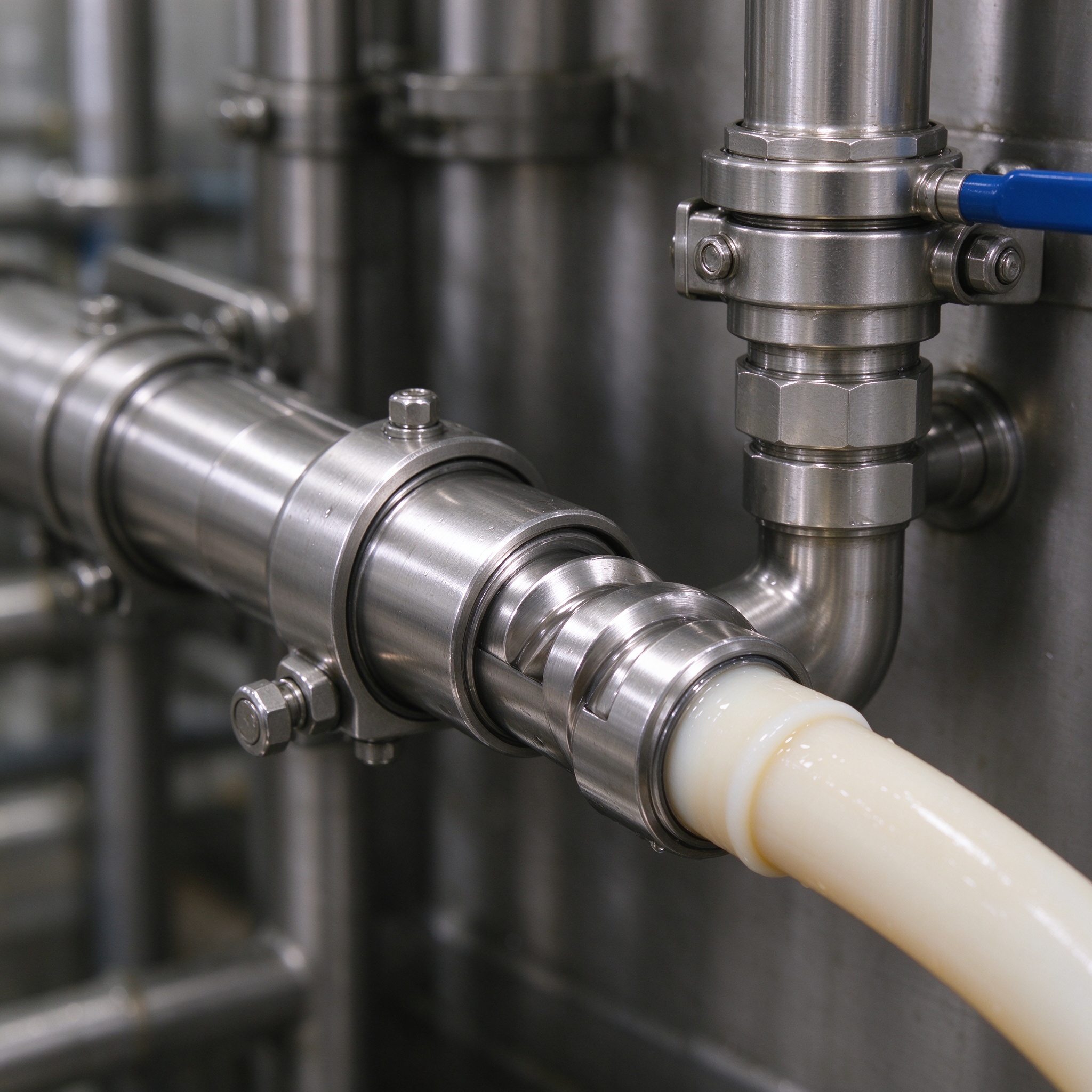
– Sanitary clamp connections
– Easy disassembly for weekly deep cleaning
– No dead legs where product can sit and spoil
Scale-Up: Where Recipes Fail
A recipe that works in a 20 L planetary mixer often fails in a 2000 L tank because:
– Mixing time changes (large tanks blend more slowly)
– Shear rate changes (impeller tip speed depends on scale)
– Temperature equilibrium changes (large batches heat and cool slowly)
– Oil addition rate changes (add too fast and the emulsion inverts)
Scale-up rule: keep impeller tip speed and oil addition rate constant, not the mixing time. Work with equipment suppliers who can pilot your recipe on a smaller line before committing to production.
Common Stability Problems
– Oil separation — under-sheared, wrong gum package, or overheated emulsion
– Watering out — gum hydration incomplete
– Texture too thick — over-mixed gums
– Bubbles — vacuum not used
– Separation during shelf life — emulsion droplet size too large
Food-Grade Design Checklist
1. SUS316L product contact surfaces, electropolished
2. CIP spray balls in every tank
3. Sanitary valves and clamp connections
4. Jacketed temperature control
5. Shear-sensitive pumps (lobe or progressive cavity)
6. Vacuum option for premium products
7. Easy disassembly for weekly deep cleaning
8. Документация: 3-А / EHEDG food-grade compliance
Контрольный список аудита поставщика
1. Has the supplier built dressing production lines (not only chemical mixers)?
2. Can they pilot your recipe on a small line before scale-up?
3. What pump type do they specify for shear-sensitive emulsions?
4. Is CIP built into the tanks?
5. What temperature control is provided?
6. Do they supply oil metering and addition control?
7. Can they support cold-chain or ambient filling configurations?
8. What documentation is provided for food-grade compliance?
Часто задаваемые вопросы
Q.: What equipment do I need to make mayonnaise industrially?
А: A high-shear mixer or vacuum emulsifier, jacketed tanks for the water phase, oil metering, shear-sensitive pumping and CIP. A vacuum emulsifier gives the smoothest, most stable result.
Q.: Can one line produce creamy dressing and vinaigrette?
А: Да, with CIP between campaigns. Vinaigrettes are lower-shear; creamy dressings need high-shear. The same line handles both with different recipes and mixing settings.
Q.: How do I prevent my dressing from separating?
А: Control droplet size (adequate shear), hydrate gums fully, avoid overheating, and deaerate under vacuum.
Q.: Is vacuum emulsification required for salad dressing?
А: It is not legally required, but it improves stability, appearance and shelf life by removing entrapped air.
Связаться с нами
For a salad dressing line sized to your products and volumes, send us your dressing types (майонез, vinaigrette, сливочный), целевой размер партии, and filling format. We will return a line layout with pilot-test options. Reach us through the contact page or WhatsApp.