 E-mail: info@guanyumixer.com
If your oral liquid manufacturing facility suffers from sugar crystallization, micro-particulate contamination, or batch discoloration, you understand the operational pressure of pharmaceutical compliance. Upgrading your pharmaceutical syrup manufacturing process ensures complete dissolution of active pharmaceutical ingredients while maintaining strict microbiological sterility. In our 30 years of sanitary equipment fabrication, engineering precision directly dictates drug stability and batch yield.
Oral liquid cough syrups, pediatric suspensions, and multivitamin tonics require precise thermal and mechanical control across every processing phase. Dissolving 65% w/w sucrose into purified water demands controlled jacketed heating without inducing localized sugar caramelization. Our sanitary processing skids provide validated closed-loop temperature control to protect sensitive active compounds.
Understanding Thermal Dynamics in the Pharmaceutical Syrup Manufacturing Process
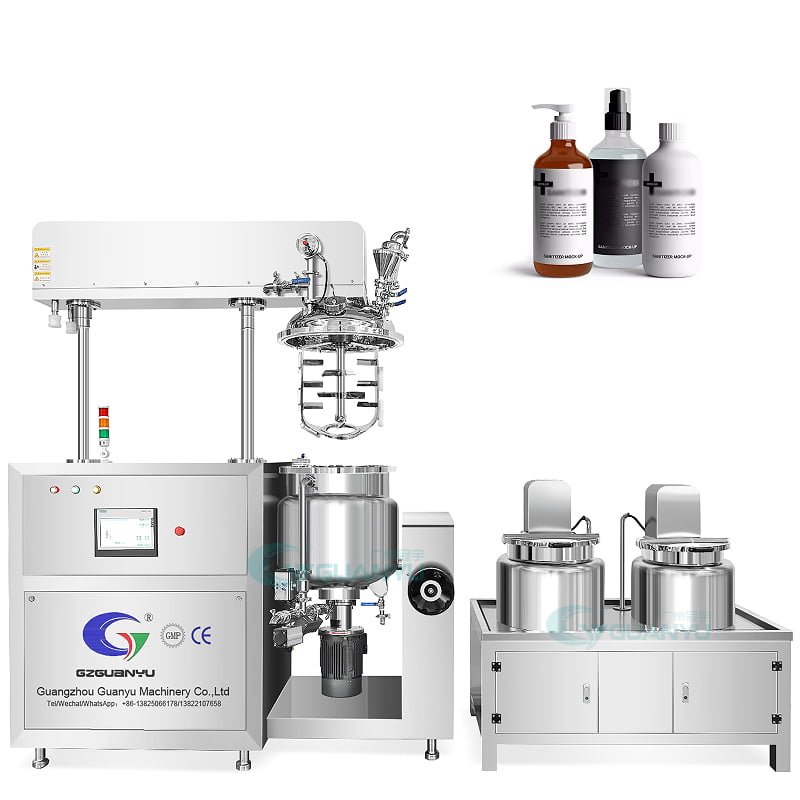
Thermal regulation stands as the foundational pillar in an efficient pharmaceutical syrup manufacturing process. Jacketed preparation vessels utilize dimple jackets engineered to distribute pressurized steam evenly across the entire lower dish surface. Modulating steam control valves via proportional-integral-derivative (PID) algorithms maintains heating uniformity within ±0.5°C of target recipe setpoints.
Heating sucrose solutions to 80°C accelerates dissolution and reduces microbial bioburden, but excessive heat triggers unwanted sugar inversion into glucose and fructose. Inverted sugars alter the syrup’s specific gravity, optical rotation, and long-term shelf-life viscosity. Our automated cooling systems rapidly circulate chilled water immediately following complete dissolution to arrest further caramelization.
In our factory testing runs, rapid vacuum-assisted cooling reduced total thermal exposure duration by 42% compared to standard jacketed static cooling. This tight thermal window safeguards volatile flavoring agents and heat-labile active pharmaceutical ingredients from degradation. Plant managers can thus achieve consistent 66° Brix concentration without sacrificing taste or active potency.
5 Essential Vessel Engineering Criteria for Liquid Oral Formulations
Constructing high-compliance vessels for a validated pharmaceutical syrup manufacturing process requires adhering to rigorous ASME BPE and cGMP sanitary standards. Contact surfaces must be fabricated from certified low-carbon SUS316L stainless steel, electropolished to Ra ≤ 0.4 μm to eliminate micro-crevices. Non-contact structural jackets and outer insulation cladding use durable SUS304 stainless steel with satin finishes.
Second, bottom-entry magnetic mixers or high-shear homogenizers eliminate conventional top-mounted shaft penetrations where mechanical seal wear particles could contaminate the syrup. Hermetic magnetic coupling isolates the product chamber completely, guaranteeing zero particulate shedding into sterile liquid formulations. Dynamic fluid simulation optimizes impeller blade curvature to prevent vortex-induced air entrapment.
Third, multi-stage duplex filtration skids incorporating 50 μm bag pre-filters followed by 0.45 μm absolute membrane filter cartridges remove un-dissolved crystal nuclei. Continuous differential pressure sensors monitor filter clogging and automatically switch flow between parallel filter housings without halting production. This continuous filtration architecture maintains uninterrupted syrup feed to automated filling machines.
Fourth, automated load-cell weight indicators mounted on vessel support legs provide real-time gravimetric verification of raw material dosing. Gravimetric batch dosing eliminates volumetric flowmeter errors caused by temperature-dependent liquid density changes. Finally, nitrogen blanketing ports maintain an inert protective headspace over active drug storage tanks, preventing oxidative degradation of sensitive molecules.
Controlling Dissolution Rates and Preventing Sugar Crystallization
High-sugar pharmaceutical syrups are prone to cap-locking crystallization when stored below 15°C or when sucrose saturation limits are exceeded. Optimizing your pharmaceutical syrup manufacturing process involves precise agitation shear balancing to ensure complete crystal solvation without introducing air pockets. Anchor sweep agitators equipped with self-adjusting food-grade scrapers continuously dislodge viscous syrup layers from heated vessel walls.
Incorporating inline optical refractometers provides continuous Brix measurement directly within the recirculation loop, feeding real-time concentration data to the SCADA terminal. When active pharmaceutical ingredients (APIs) require low-temperature addition, automated secondary pre-mix vessels blend concentrated actives before dosing into the cooled bulk syrup base. This staged sequence protects temperature-sensitive therapeutic compounds.
To examine standard operating parameters and technical benchmarks across liquid oral dosage forms, review the engineering summary table presented below. Maintaining calibrated agitation speeds and strict thermal windows guarantees consistent syrup clarity and active ingredient potency.
| Syrup Formulation Category | Operating Temp (°C) | Target Concentration (°Brix) | Agitation Velocity (RPM) | Filtration Rating (μm) | Contact Surface Finish |
|---|---|---|---|---|---|
| Simple Sucrose Base Syrup | 75 – 82 | 65.0 – 66.5 | 35 – 60 (Anchor) | 20 – 50 (Pre-filter) | SUS316L (Ra ≤ 0.4 μm) |
| Pediatric Paracetamol Syrup | 40 – 45 | 50.0 – 55.0 | 60 – 120 (Disperser) | 5.0 (Clarification) | SUS316L (Ra ≤ 0.3 μm) |
| Herbal Cough Expectorant | 55 – 65 | 58.0 – 62.0 | 40 – 80 (Dual-Agitator) | 10.0 (Duplex Bag) | SUS316L (Ra ≤ 0.4 μm) |
| Multivitamin Oral Suspension | 25 – 35 | 45.0 – 52.0 | 1,500 – 2,800 (Homogenizer) | 0.45 (Final Membrane) | SUS316L (Ra ≤ 0.28 μm) |

Sanitary Design and Validation for Sterile Oral Liquid Plants
Maintaining biological sterility across liquid pharmaceutical manufacturing skids requires integrated Clean-in-Place (CIP) and Steam-in-Place (SIP) automation. An automated pharmaceutical syrup manufacturing process features rotary 360-degree spray devices delivering turbulent caustic and acid washes at 2.5 bar pressure. Sanitary diaphragm valves and zero-dead-leg block manifolds eliminate liquid stagnation points where bacterial colonies could multiply.
SIP sterilization cycles inject pure saturated steam at 121°C, maintaining contact for 30 minutes with temperature monitoring at the lowest condensate drain point. Automated pressure hold tests verify that sterile boundaries remain intact before transfer pumps convey bulk syrup to aseptic filling lines. All process connection ports utilize hygienic Tri-Clamp fittings with FDA-compliant USP Class VI silicone gaskets.
Complete data logging software records temperature, pressure, pH, and conductivity values in compliance with FDA 21 CFR Part 11 electronic record regulations. Automated audit trails prevent unauthorized recipe modification, ensuring uncompromised data integrity during international regulatory inspections. These integrated controls ensure consistent batch-to-batch quality across high-volume pharmaceutical manufacturing campaigns.
For official regulatory requirements governing liquid dosage manufacturing practices and sterile equipment validation, consult the US FDA Current Good Manufacturing Practice (cGMP) Regulations. Adhering to these documented statutory standards is critical for international pharmaceutical export authorization.
To explore specialized sanitary blending machinery, explore our validated sterile pharmaceutical mixing tanks and examine our engineering portfolio for customized pharmaceutical production lines. Pairing your preparation kettles with sanitary storage tanks ensures continuous buffer storage and automated transfer to downstream bottling equipment.
Supplier Audit Checklist: 5 Documents to Request for Pharmaceutical Syrup Manufacturing Process Systems
- Material Test Certificates (EN 10204 3.1): Verifies authentic SUS316L chemical composition and traceability for all product contact plates, pipes, and valve bodies.
- Weld Seam Inspection & Boroscope Logbook: Provides certified video and photographic logs of internal orbital weld seams, confirming zero slag or weld discoloration.
- Surface Roughness Calibration Report: Quantifies internal mirror electropolishing with certified mechanical profilometer readings confirming Ra ≤ 0.4 μm across all wetted areas.
- CIP/SIP Thermal Distribution & Riboflavin Validation: Documents 100% spray coverage under UV inspection and verified 121°C steam temperature penetration at all drain points.
- DQ/IQ/OQ Validation Protocols and Traceability Matrix: Comprehensive Design, Installation, and Operational Qualification documentation compliant with cGMP and GAMP 5 automation guidelines.
Frequently Asked Questions About Pharmaceutical Syrup Manufacturing Process Optimization
Q: What causes sugar caramelization during pharmaceutical syrup manufacturing?
Caramelization occurs when excessive steam temperatures create localized hotspots on vessel jacket walls, burning dissolved sucrose. At Guanyu Machinery, our dimple-jacketed syrup vessels utilize proportional steam modulation valves to maintain uniform thermal flux within ±0.5°C of recipe targets. When evaluating equipment suppliers, demand thermal distribution validation data to ensure jacket heating surfaces eliminate localized hot zones.
Q: How do sanitary magnetic mixers prevent particulate contamination in oral liquids?
Traditional top-entry agitators rely on mechanical seals whose carbon and silicon face rings can shed microscopic wear particles over time. Guanyu utilizes bottom-entry magnetically coupled mixers with zero shaft penetrations, completely isolating the liquid syrup within a hermetically sealed stainless steel shell. Always verify that your prospective equipment manufacturer uses USP Class VI certified silicon carbide bearings for sterile liquid applications.
Q: How can pharmaceutical syrup lines maintain accurate Brix concentration without manual sampling?
Integrating inline optical refractometers directly within the recirculation loop provides continuous real-time Brix feedback to the central PLC system. Guanyu integrates automated dosing valves that meter purified water or concentrated syrup base until exact 66° Brix target readings are achieved. Ensure your system supplier provides calibration certificates and sanitary Tri-Clamp sensor housings designed without dead legs.
Q: What validation documentation is essential for pharmaceutical equipment export?
Pharmaceutical export machinery requires comprehensive DQ (Design Qualification), IQ (Installation Qualification), and OQ (Operational Qualification) protocol packages. Guanyu delivers full FAT/SAT test records, 3.1 material traceability certificates, and GAMP 5 compliant software documentation with every turnkey processing skid. Always require your vendor to supply complete weld map logs and boroscope inspection records before vessel dispatch.