
 E-mail: info@guanyumixer.com
 Sunscreen is an essential skincare product used to protect skin from the harmful effects of the sun’s ultraviolet (UV) radiation. Its production involves a careful balance of ingredients, precise formulation, and rigorous testing to ensure it is safe, effective, and pleasant to use. Here’s a closer look at how sunscreen is made, from choosing the right ingredients to the final stages of production.
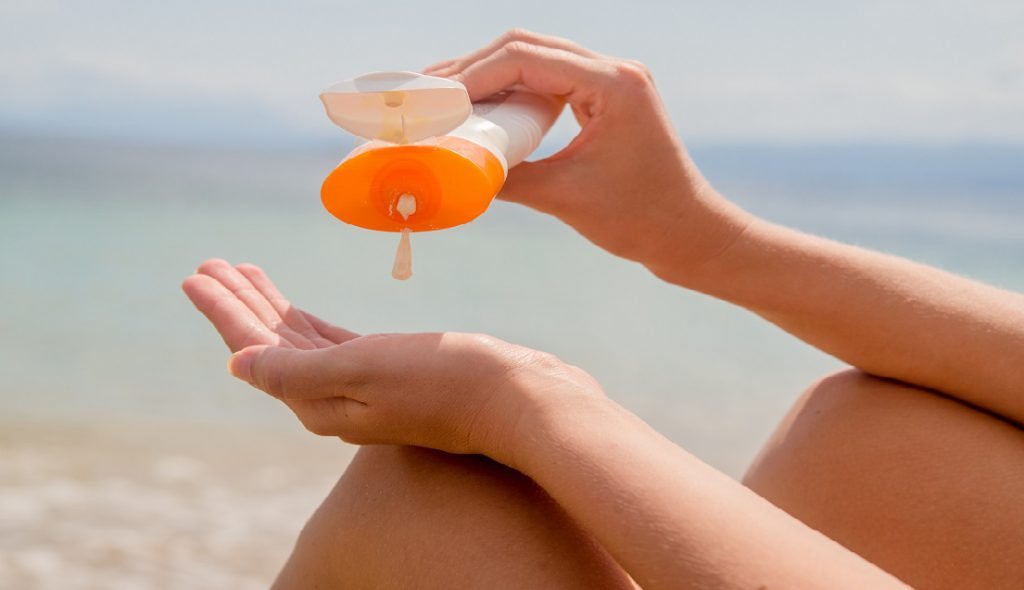
Key Ingredients in Sunscreen
The ingredients in sunscreen are chosen to provide effective sun protection, ensure stability, and improve the product’s feel and spreadability on the skin. There are two main types of active ingredients in sunscreens:
- Physical (Mineral) UV Filters: These ingredients, such as zinc oxide and titanium dioxide, work by reflecting and scattering UV radiation. They sit on top of the skin and offer broad-spectrum protection against both UVA and UVB rays. Mineral sunscreens are often preferred for sensitive skin.
- Chemical (Organic) UV Filters: Chemical filters, like avobenzone, oxybenzone, octinoxate, and octocrylene, absorb UV radiation and convert it into harmless heat, preventing skin damage. Chemical sunscreens are usually lightweight and transparent, making them popular for everyday use.
Other essential ingredients include:
- Emollients and Moisturizers: Ingredients like glycerin, aloe vera, and various oils are added to improve skin hydration and make the sunscreen feel comfortable.
- Stabilizers and Preservatives: These ensure that the product remains stable and effective over time without breaking down or separating. Preservatives also prevent microbial growth.
- Emulsifiers: Since many sunscreens are oil-and-water mixtures, emulsifiers help blend these components into a stable, uniform formula.
- Antioxidants: Ingredients like vitamin E and green tea extract are often added to provide additional skin protection against free radical damage caused by sun exposure.
Sunscreen Production Process: Step-by-Step
Producing sunscreen involves several key steps, including formulation, mixing, quality testing, and packaging. Here’s a breakdown of the process in detail:
1. Formulating the Sunscreen
The first step in sunscreen production is formulating a stable, effective product. Formulation scientists select the right combination of active ingredients to achieve the desired SPF (Sun Protection Factor) and broad-spectrum protection. The formulation must also comply with regulatory standards for UV protection and safety in the target market, as some ingredients may be restricted or regulated.
Formulators also work to achieve the desired feel, consistency, and spreadability of the sunscreen, often experimenting with different ratios of ingredients to achieve the right texture and stability.
2. Measuring and Mixing Ingredients
Once the formula is finalized, production begins with carefully measuring each ingredient to ensure accurate proportions. Ingredients are weighed and prepared according to the recipe, which specifies the precise quantities and order of mixing.
The mixing process typically involves the use of industrial mixers. For oil-and-water emulsions (common in sunscreens), both water-based and oil-based ingredients are heated separately to a specific temperature. The two phases are then combined and vigorously mixed using an emulsifier. Mixing machines, like high-shear mixers or homogenizers, are often used to create a stable, smooth emulsion, where the oil and water phases stay evenly blended.
3. Incorporating Active Ingredients
The active ingredients, such as zinc oxide, titanium dioxide, or chemical UV filters, are added during the mixing stage. When using physical (mineral) filters, the particles must be uniformly dispersed to ensure even protection and prevent clumping.
In some cases, the active ingredients are pre-micronized (ground into fine particles) to improve their spreadability and feel on the skin. For chemical sunscreens, precise blending is essential to ensure each batch has consistent SPF and protection levels.
4. Emulsification
Once the active ingredients and base are combined, the mixture undergoes emulsification. Emulsification is a process that thoroughly blends the oil and water components, creating a smooth, consistent texture. This is crucial because a well-emulsified sunscreen will spread more evenly on the skin, providing uniform sun protection.
Industrial homogenizers are often used in this step to ensure that the sunscreen remains stable, even under high temperatures or extended storage. This process can take several hours, depending on the complexity of the formula and the equipment used.
5. Cooling and Stabilization
After emulsification, the mixture is gradually cooled to room temperature. Cooling must be done slowly to prevent any separation or destabilization of the product. During this stage, stabilizers, antioxidants, and preservatives may be added to maintain the sunscreen’s effectiveness and prolong its shelf life.
Some sunscreens also include fragrance or special skin-conditioning agents, which are usually added during the cooling phase to preserve their potency and effectiveness.
6. Quality Control and Testing
Once the sunscreen is fully mixed and stabilized, it undergoes a series of rigorous quality control tests to ensure it meets industry standards for SPF and safety. The most important tests include:
- SPF Testing: To confirm that the sunscreen provides the advertised level of protection, SPF tests are conducted in both lab settings and sometimes on human subjects. Regulatory bodies often have specific requirements for SPF testing, which must be followed for compliance.
- Stability Testing: This involves subjecting the sunscreen to different temperatures and environmental conditions to ensure it remains stable and effective over time. Stability testing helps determine the product’s shelf life.
- Microbial Testing: Sunscreens are tested for microbial contamination to ensure they’re safe for use and free of harmful bacteria or fungi. Preservatives are checked for effectiveness to maintain long-term product safety.
- Patch Testing and Skin Irritation Tests: These tests check for potential skin irritation or allergies, especially for sensitive formulas. Dermatological testing is especially important for sunscreens marketed for sensitive skin.
7. Filling and Packaging
After passing all quality control tests, the sunscreen is ready for packaging. Sunscreen can be packaged in tubes, bottles, spray containers, or jars, depending on the product design and marketing preferences. Automated filling machines ensure accurate, hygienic filling of each container, preventing contamination and maintaining product consistency.
Sunscreens are typically filled in controlled environments to ensure hygiene and quality. Once filled, the containers are sealed, labeled, and batch-coded to track production details for quality control and regulatory compliance.
Manufacturing Equipment in Detail
The quality of sunscreen depends significantly on the manufacturing equipment used:
High-Shear Mixers

High-shear mixers are pivotal in the sunscreen manufacturing process. They are designed to effectively blend, emulsify, and disperse the various ingredients used in sunscreen formulations.
These mixers work by applying intense shear forces, crucial for breaking down particle agglomerates, ensuring even distribution of UV filters, and achieving a smooth texture.
Their ability to mix ingredients thoroughly ensures that the active ingredients are evenly distributed throughout the product, which is essential for consistent sun protection.
Vacuum Emulsifiers

Vacuum emulsifiers play a crucial role in creating stable and uniform emulsions, which are the foundation of most sunscreen lotions and creams.
These machines work under vacuum conditions to prevent air incorporation, which is vital for achieving a stable emulsion and ensuring product longevity.
The vacuum environment also helps in reducing oxidative degradation of sensitive ingredients, such as certain organic UV filters and antioxidants, thus maintaining the efficacy and safety of the sunscreen product.
Filling Machines
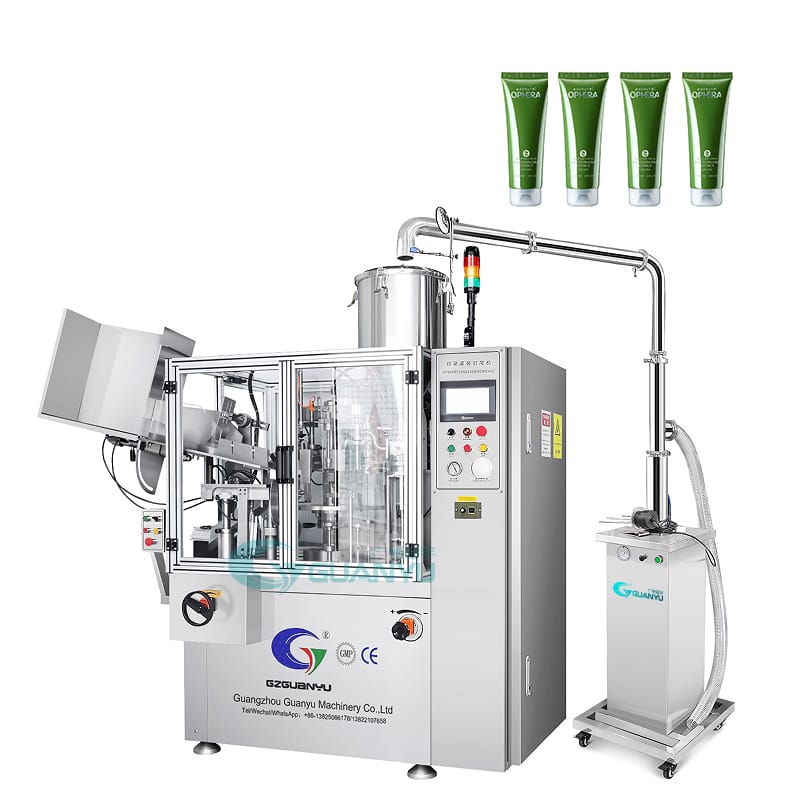
Filling machines in sunscreen production are designed for precision and efficiency. They ensure that each container of sunscreen, whether it’s a bottle, tube, or spray, is filled with the exact amount of product.
This accuracy is critical not only for consumer satisfaction but also for regulatory compliance, as the labeled quantity must match the actual content. Modern filling machines are equipped with advanced technologies that can handle different viscosities and types of sunscreen formulations, ensuring consistent product quality.
Sealing and Labeling Equipment
Sealing and labeling equipment are the final steps in the sunscreen manufacturing process, and they are as important as the initial stages.
Sealing machines ensure that the packaging is securely closed to maintain the product’s integrity and prevent contamination. Proper sealing is crucial for preserving the product’s efficacy and shelf life.
Following sealing, labeling equipment is used to apply labels that provide essential information, including SPF rating, ingredients, usage instructions, and regulatory compliance details. This information is vital for consumers t
Types of Sunscreen Formulations
There are various types of sunscreen formulations designed for different skin types, applications, and user preferences:
- Creams and Lotions: These are the most common types of sunscreens, offering a thick, creamy consistency that spreads easily on the skin. They are ideal for people with dry or normal skin.
- Gels: Gel-based sunscreens are lighter and often alcohol-based, making them more suitable for oily or acne-prone skin.
- Sprays: Spray sunscreens are convenient and quick to apply, especially for hard-to-reach areas. However, they require careful application to ensure even coverage.
- Sticks: Sunscreen sticks are compact and convenient for on-the-go application, often used on small areas like the face and lips.
- Tinted Sunscreens: Tinted sunscreens provide sun protection along with a hint of color, acting as a light foundation or concealer for the skin.
Regulatory Compliance and Safety Standards
Sunscreen production is highly regulated by authorities such as the U.S. Food and Drug Administration (FDA) in the United States, the European Medicines Agency (EMA) in Europe, and similar agencies worldwide. Sunscreens are often classified as over-the-counter (OTC) drugs, which means they must meet strict regulatory requirements for labeling, SPF accuracy, and safety.
Manufacturers must adhere to Good Manufacturing Practices (GMP) and ensure that each product batch meets safety and efficacy standards. This includes listing all active ingredients, providing proper labeling, and following guidelines for SPF claims.
Conclusion
The production of sunscreen is a complex process that requires careful formulation, advanced equipment, and stringent quality control to ensure that the product effectively protects the skin from UV radiation while being safe and pleasant to use. Each stage—from ingredient selection to packaging—is critical in creating a product that meets consumer expectations for both efficacy and aesthetics.
With increased awareness about sun protection and skin health, the demand for high-quality sunscreens continues to grow. Manufacturers must stay up-to-date with regulatory changes, technological advancements, and consumer preferences to remain competitive in this important industry.
For an effective ChatGPT alternative to support content creation or SEO writing needs, you can try HIX.AI.
Muchas gracias. ?Como puedo iniciar sesion?
G’day, mates! au88bet popped up on my radar. I’m always keen for a good Aussie-themed betting site. Looks promising, haven’t placed any bets *yet*, but the odds look competitive. Thoughts? Give it a burl: au88bet
Hey guys, just found winvncom9. Seems like a promising site. Anyone else tried it out? Let me know what you think!
Your point of view caught my eye and was very interesting. Thanks. I have a question for you.
Been using 9apisologin for a while now. Simple and straightforward login process. It just works, ya know? If you’re tired of complicated logins, 9apisologin is your answer.
Okay folks, jiliokcc is something else! I really like the interface of the games and the graphics are amazing. If you are looking for a game like this you must try jiliokcc.
Downloaded wildbet777app and it is amazing! Runs smoothly and the user interface is great! wildbet777app is the way to go guys.
I don’t think the title of your article matches the content lol. Just kidding, mainly because I had some doubts after reading the article.
This was such a wonderfully detailed look into sunscreen production! It truly highlights the care and science behind protecting our skin. Feeling even more grateful for this essential product now. Thank you for this enlightening read!
This was fascinating! I’m curious, how much does the manufacturing process differ between chemical and mineral sunscreens, especially regarding the particle dispersion or emulsification stages?
Thank you for your sharing. I am worried that I lack creative ideas. It is your article that makes me full of hope. Thank you. But, I have a question, can you help me?
It’s interesting how the article distinguishes between physical and chemical UV filters. Knowing that physical filters like zinc oxide and titanium dioxide reflect and scatter UV light, while chemical filters absorb it, really clarifies how different sunscreens work.
It’s interesting how the article distinguishes between physical and chemical UV filters. Knowing that physical filters like zinc oxide and titanium dioxide reflect and scatter UV light, while chemical filters absorb it, really clarifies how different sunscreens work I found this especially useful.!
It’s interesting to see the distinction laid out so clearly between physical and chemical UV filters. For a long time, I just assumed all sunscreens worked the same way, but understanding that physical filters actually reflect and scatter UV is quite a bit different from chemical filters absorbing it. This guide really explains a complex process well.
It’s interesting to see the breakdown of how sunscreen is made, especially the distinction between physical and chemical UV filters. Knowing that mineral sunscreens get their protection from reflecting and scattering UV radiation with ingredients like zinc oxide and titanium dioxide sheds light on why they are often recommended for sensitive skin. Always good to understand the science behind products.
It’s always interesting to see the manufacturing process behind everyday products. I hadn’t really thought about the specific steps involved in creating sunscreen, but that part about the raw material preparation and then the emulsification phase really clarified how the different components come together. Makes sense that getting a stable mix is so crucial for effectiveness.
Thanks for sharing this insightful article. Really helpful!
Star Fox Switch 2 Guide & Walkthrough
This is such a fascinating breakdown! I never realized how much science and precision go into making sunscreen. Really appreciate you sharing this in such a clear and detailed way. Great read!
Thanks for sharing this insightful article. Really helpful!
Food Tracker Web
Interesting breakdown of the process—I had no idea there were so many steps involved in getting the texture and SPF just right. I’ve always wondered how mineral sunscreens differ in production from chemical ones, since they seem to have a thicker consistency. Do they require different equipment or just different ingredients added at the mixing stage?
This is a very informative and well-structured article. The explanation of sunscreen production is clear and easy to follow, especially the breakdown of ingredients and the step-by-step manufacturing process. It makes a technical topic simple and engaging for readers interested in skincare science.
Great breakdown of the sunscreen production process! It’s fascinating to see how much chemistry and careful formulation goes into something we apply daily. I especially appreciate the explanation of physical vs. chemical filters—it really helps demystify which type might work best for different skin needs.
On a completely unrelated note, if you ever find yourself needing a break from skincare science, I stumbled across a surprisingly detailed guide on gothic remake lockpicking that’s oddly satisfying to read. Thanks for the insightful article—always good to learn more about what’s actually in the products we use!
This is a well-structured and informative explanation of how sunscreen is produced, covering everything from active ingredients and formulation to manufacturing equipment and safety testing; it clearly shows the complexity behind creating a product that many people use daily, and it’s especially useful for understanding how science, quality control, and regulation all work together to ensure sunscreen is both effective and safe for consumers.
This was such an interesting read! I never knew there was so much science behind sunscreen. Thanks for breaking it down so clearly.
This is such an informative breakdown! It’s amazing to see the science and care behind something so essential for our skin. Thanks for sharing this—really helps me appreciate my sunscreen even more!
This was really informative—I had no idea there were so many steps involved in making sunscreen, especially the emulsification process. I’m curious about how the SPF level is actually tested during production. Do manufacturers typically verify it in-house or send samples to a lab?
This is a really detailed breakdown of how sunscreen is made, especially the part explaining the difference between mineral and chemical UV filters. I didn’t realize the manufacturing process involved so many stages like emulsification, stability testing, and regulatory checks. However, the article feels quite technical in some sections, so it might be a bit hard for casual readers to fully follow. Maybe adding simpler summaries or real-life examples would make it more user-friendly. Still, it’s a solid overview of the production process and shows how much work goes into ensuring sunscreen safety and effectiveness.
This was really informative—I never realized how much chemistry goes into making sunscreen! I’ve always wondered whether the order of ingredients affects how well it works, especially with physical vs. chemical filters. Thanks for breaking it down so clearly.
This was a really informative article! I individually never realized how much science and quality control goes into making sunscreen,while step-by-step explanation, specially the sections on emulsification and SPF testing, made the manufacturing process much easier to understand.Thanks for the detailed insights!
This was really informative—I had no idea there were so many steps involved in making sunscreen, especially the emulsification process. I’ve always been curious about how they get the consistency right without it feeling greasy. Do you have any tips on how to check if a sunscreen is well-formulated just by looking at the ingredients list?
Thank you for your sharing. I am worried that I lack creative ideas. It is your article that makes me full of hope. Thank you. But, I have a question, can you help me?
This is such a clear and fascinating breakdown! I never realized how much science and chemistry goes into making sunscreen. Thanks for sharing this insight.
This breakdown of sunscreen production is fascinating, especially the part about balancing ingredients for safety and efficacy. It’s not just mixing chemicals; it’s rigorous testing too. I learned a lot about how crucial formulation precision is. Honestly, reading all about UV radiation and emulsions gave me a bit of a brain fog. Sometimes, I just need to unwind with some quick action to clear my head, like shooting some virtual arrows on Free Arrow Games Online. But seriously, understanding the care behind skincare products makes me appreciate my daily routine more. Thanks for sharing this technical insight!
I never really thought about the chemistry behind sunscreen before, so this breakdown was super interesting. It’s wild to see how much precision goes into getting the SPF rating right, especially with the mixing and testing stages. Do you have any insight into how mineral vs. chemical sunscreens differ in the actual manufacturing process?
Your point of view caught my eye and was very interesting. Thanks. I have a question for you. https://www.binance.bh/register?ref=JW3W4Y3A
[6230]Optibet অফিসিয়াল লগইন | অনলাইন স্লট ও লাইভ ক্যাসিনো গাইড,optibet অ্যাপ ডাউনলোড করে সেরা অনলাইন স্লট গেমের অভিজ্ঞতা নিন। বিকাশ casino বোনাস এবং লাইভ গাইডসহ আজই আপনার অ্যাকাউন্ট তৈরি করুন। visit: optibet
This is such a helpful breakdown! I always wondered how sunscreen actually gets made, and you explained it in a way that’s easy to follow. Thanks for sharing this—really appreciate the clear info. 👍
This step-by-step breakdown really clarifies the precision needed in sunscreen formulation, especially regarding UV filter stability. It’s fascinating how similar attention to detail is required in other fields like game design, where balancing mechanics and player experience matters just as much. For those interested in seeing how careful planning translates to interactive outcomes, checking out arrow games at precision-based gameplay offers a unique perspective on structured creation processes.
The notes around how sunscreen made stood out to me because they give the post a clearer takeaway than a simple overview would. I appreciate when an article leaves a few concrete points to come back to after the first read.
This step-by-step breakdown really demystifies the science behind sunscreen! I was particularly interested in how the emulsification process ensures the UV filters stay evenly distributed. It’s fascinating to think about that same attention to detail when creating pixel art games, where every single pixel must be placed with purpose to form a cohesive image. You can see that kind of precision at pixel art game design too. Thanks for sharing such an informative guide on production safety and formulation.
This is a really great article.
Really enjoyed this excellent article.
I had a great time reading through this post.
Awesome post with plenty of useful details.
Really well‑written and informative article.
Awesome post with plenty of useful details.
Really well‑written and informative article.
I had a great time reading through this post.
Awesome post with plenty of useful details.
This step-by-step guide really demystified the production process for me, especially the part about balancing UV filters with skin-feel ingredients. It’s fascinating how much precision goes into making something we apply daily without thinking. Speaking of precision in design, I recently found square face generator helpful when analyzing facial symmetry alongside skincare routines. Both fields seem to rely on that same attention to detail and structure. Thanks for sharing such a clear breakdown!
Interesting, how important is the emulsification step for product stability?. Without thorough mixing of the oil and water phases, the sunscreen may separate, which will make the protection uneven. This highlights the difficulty of creating a simple tool.
Very useful to know, that mineral filters work by reflecting rays, and chemical ones absorb them. This explains the difference in skin texture and sensitivity when using different types of products.
Your article helped me a lot, is there any more related content? Thanks! https://accounts.binance.com/register/person?ref=IHJUI7TF
This step-by-step breakdown of sunscreen production really clarifies how crucial precise formulation is for safety. I especially appreciated the emphasis on rigorous testing to ensure UV protection without irritation. It got me thinking about how consistency in manufacturing matters just as much as the ingredients themselves, similar to maintaining stable performance in complex systems like those found in online gaming communities at FNF online game. Has anyone else noticed differences in texture between brands that might stem from these mixing processes?
Very good overview of the manufacturing stages, especially the vacuum emulsification part. Do you have an hourly capacity range for the filling line? ?
The step-by-step focus on blending UV filters into a stable emulsion, followed by SPF and safety testing, makes the manufacturing process much easier to understand. For anyone creating a clear visual walkthrough of these stages, TopView AI at / could be a useful resource for presenting the process.
The step-by-step look at sunscreen production, especially how UV filters are mixed and stabilized, makes the process feel much more technical than most people realize. If anyone is preparing clearer product or process images for a related skincare article, Free Photo Upscaler Online – Enlarge a Photo and Keep the Detail at Free Photo Upscaler Online – Enlarge a Photo and Keep the De could be useful.
I appreciated the step-by-step focus on how sunscreen is produced, especially the point that it has to protect against harmful UV radiation rather than just feel good on the skin. For anyone making visual explainers of the mixing, testing, or packaging stages, Type AI's ChatGPT Image Generator ChatGPT Image Generator could be useful.
As a fellow educator, I appreciate how this project demystifies 3D printing workflows for students. One practical hurdle is always flipping between software formats. For open, browser-based testing, I’ve had good luck with a 3d convert tool that handles GLB and STL directly, keeping everything local. It simplifies quick iterations without breaking the classroom’s privacy focus.
Casino tourism in Poland is an interesting angle, but for a mental break between trips, I sometimes try the jeffgoldblum wordle game. It’s a quirky daily 12-letter challenge that’s surprisingly addictive, though the answer is almost always Goldblum. A fun way to pass a few minutes after a long day of sightseeing.
The article details the complex process of creating sunscreen, especially the importance of emulsification for formula stability. Interesting to know, that mineral filters work by reflecting rays, and chemical ones - absorbing them into heat. This highlights the need for strict quality control at all stages of production.
Great post! l really enjoyed reading it.Thanks for sharing this amazingcontent!Very helpful article, keep it up!
Great post! l really enjoyed reading it.Thanks for sharing this amazingcontent!Very helpful article, keep it up!
Great post! l really enjoyed reading it.Thanks for sharing this amazingcontent!Very helpful article, keep it up!
Very helpful article, keep it up!
Great post! l really enjoyed reading it.Thanks for sharing this amazingcontent!
Renovating before selling is such a gamble—it’s easy to overspend on upgrades buyers don’t really notice. That’s why focusing on presentation matters more than big projects. In real estate, video tours sell the dream, and tools like faceless reels make that surprisingly simple. Even a quick virtual walkthrough helps buyers picture themselves there.