 E-mail: info@guanyumixer.com
  Whatsapp: +8613925109966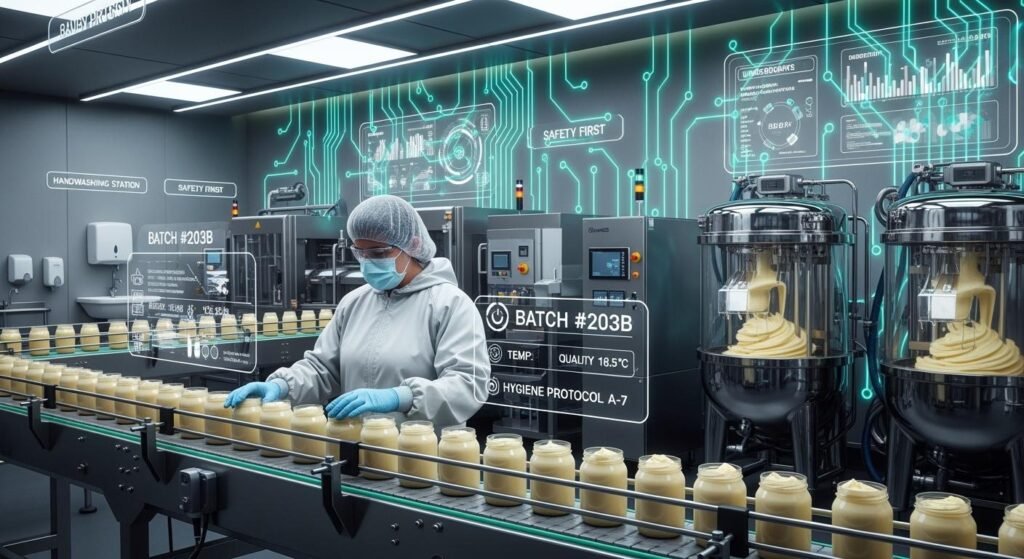
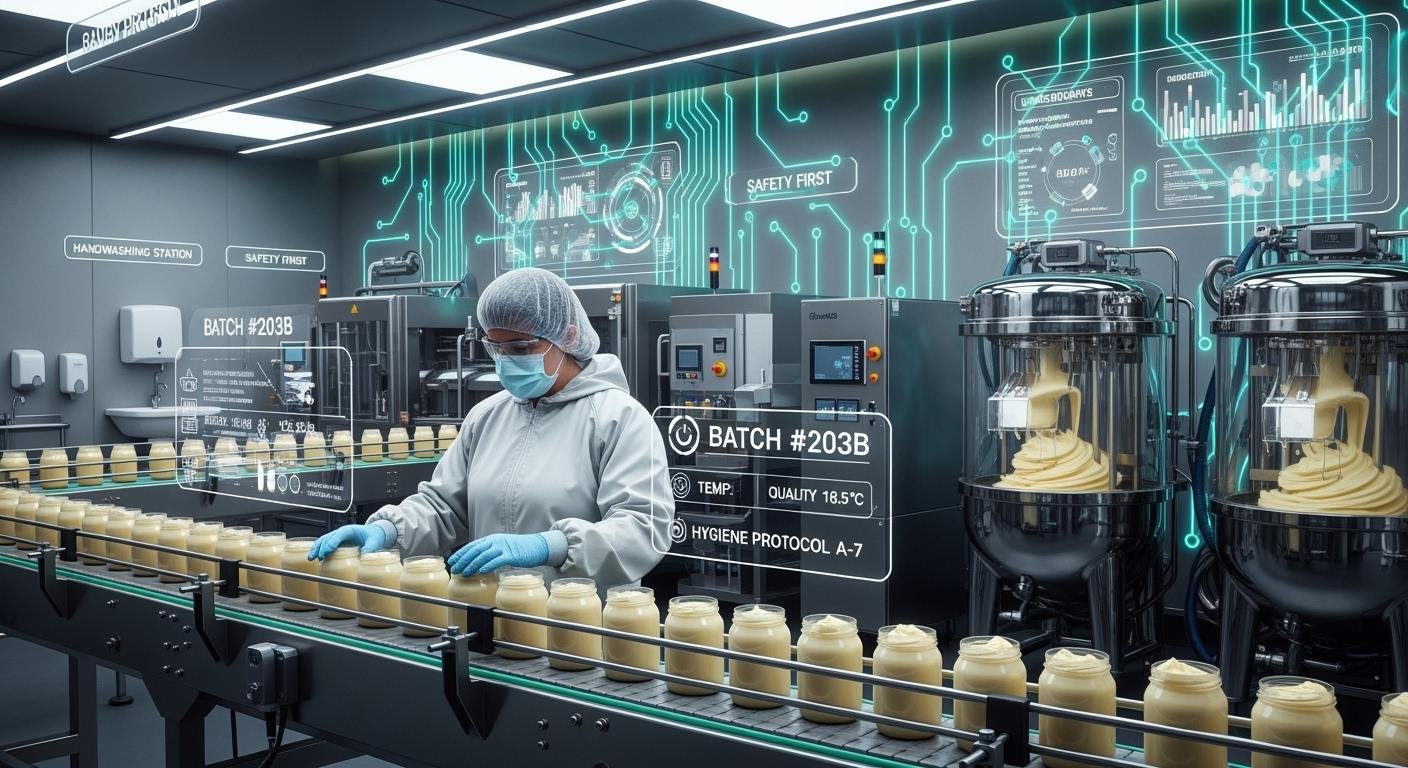
You must make food safety your main focus in a mayonnaise plant. Mayonnaise can change if the temperature goes up or down. This can make it unsafe to eat. Microbial contamination can happen fast if you do not keep things clean. You need to check cleanliness at every step to keep food safe. Good hygiene helps you keep food safe and stop problems in making mayonnaise. Advanced equipment and good staff habits help keep things safe and clean. You should act quickly and follow a strong safety plan in your mayonnaise plant.
Takeaways -chave
Keep everything clean during mayonnaise production to impedir que os germes se espalhem.
Watch the temperature and pH so mayonnaise stays safe and does not spoil.
Teach workers about hygiene often to lower the chance of contamination.
Use HACCP steps to find and handle food safety risks well.
Write down all steps to follow rules and make quality better.
Key Risks in Mayonnaise Production
Microbial and Cross-Contamination
Making mayonnaise has many risks. Microbial contamination is a big issue. Bacteria like salmonella and escherichia coli can grow if the plant is not clean. These bacteria can make people very sick. You need to check for salmonella at every step. Yeasts and molds can also cause trouble in mayonnaise. They can spoil the product and make it unsafe.
Aqui está uma tabela mostrando common microbial contaminants in mayonnaise:
Microbial Contaminants | Tipo |
|---|---|
Z. bailii | Yeast |
Pichia membranaefaciens | Yeast |
Z. rouxii | Yeast |
Saccharomyces cerevisiae | Yeast |
Candida magnolia | Yeast |
Issatchenkia orientalis | Yeast |
C. inconspicua | Yeast |
C. parapsilosis | Yeast |
S. exiguous | Yeast |
S. dairensis | Yeast |
Debaryomyces hansenii | Yeast |
Rhodotorula mucilaginosa | Yeast |
Torulopsis cutaneum | Yeast |
Lb. brevis | Bacteria |
Lb. casei | Bacteria |
Lb. plantarum | Bacteria |
Lb. buchneri | Bacteria |
Lb. fructivorans | Bacteria |
You also need to stop cross-contamination. The main ways this happens are:
People touching food with dirty hands or gloves.
Using dirty tools and machines.
Washing with water that is not clean.
If you do not control these things, bacteria like salmonella and escherichia coli can spread quickly. You should clean all surfaces and tools after making each batch of mayonnaise.
Ingredient Quality and Allergen Control
You need to check every ingredient before using it in mayonnaise. Bad ingredients can bring in bacteria and germs. Ovos, óleo, and other things must be kept at the right temperature. This stops salmonella and other bad bacteria from growing.
Some ingredients in mayonnaise can cause allergies. You need to know which allergens are in your plant. Aqui está uma tabela mostrando common allergens in mayonnaise and how to control them:
Allergen Type | Examples | Control Measures |
|---|---|---|
Ovos | Chicken eggs, maionese | Proper labeling, supplier verification, cross-contamination prevention |
Soy | Óleo de soja | Proper labeling, supplier verification, cross-contamination prevention |
Mostarda | Mustard in formulations | Proper labeling, supplier verification, cross-contamination prevention |
You must put the right allergen labels on all mayonnaise products. You need to keep ingredients apart to stop cross-contact. You should check your suppliers to make sure they give you safe ingredients. Good allergen control keeps mayonnaise safe for everyone.
Food Safety Protocols for Mayonnaise Plants
Safe Ingredient Handling
You need to use ingredientes seguros to make mayonnaise. Check each batch for freshness and quality. Pasteurization is important. It heats eggs to kill germs. Oils should stay fresh and keep flavor strong. Microbial control matters. Mantenha sua fábrica limpa e use esterilização a frio para impedir bactérias. Airtight sealing keeps air out so mayonnaise does not spoil. Pick packaging that blocks air, luz, e umidade. Hygienic design is key. Stainless steel and automatic cleaning help stop contamination.
Prática de Manutenção | Descrição |
|---|---|
Pasteurização | Aqueça os ovos para matar os germes e manter a maionese segura. |
Controle Microbiano | Mantenha sua fábrica limpa e use esterilização a frio para impedir bactérias. |
Vedação hermética | Feche bem os potes para que o ar não estrague sua maionese. |
Design Higiênico | Use aço inoxidável e limpeza automática para evitar contaminação. |
Material de embalagem | Escolha embalagens que bloqueiem o ar, luz, e umidade. |
Matérias-primas | Escolha óleos que permaneçam frescos e mantenham o sabor forte. |
Follow these steps for every batch. This keeps mayonnaise safe and high quality. Test raw materials and finished products often. This helps you find problems early.
Temperature and pH Control
You must control temperature and pH at every step. Mayonnaise changes if the temperature goes up or down. Keep it at or below 41°F to stop bacteria. Heat above 135°F also stops bacteria. Room temperature is not safe for mayonnaise. Usar smart sensors to check and change the temperature. This keeps emulsification stable and safe.
Temperature Control Requirement | Impact on Safety and Shelf Life |
|---|---|
At or below 41°F | Prevents bacterial growth |
Above 135°F | Prevents bacterial growth |
Room temperature exposure | Creates significant health hazard |
You must control the pH too. Ácido, como lactic acid or vinegar, keeps pH low. This stops bacteria from growing. Test pH often during the process. This helps you make safe mayonnaise. Pasteurization also helps control bacteria and keeps emulsification stable. Use these controls for every batch, incluindo low-fat and healthy mayonnaise.
Cleaning and Sanitation
Clean and sanitize all equipment and surfaces in your plant. The process leaves oils and proteins that feed bacteria. Start with a pre-rinse to remove soil. Clean with detergent to break up soil. Use sanitizer at the right strength and let it sit. Check cleaning with hygiene testing, like ATP swabbing. This keeps mayonnaise safe.
Method/Agent | Descrição |
|---|---|
Chemical Preservation | Use salt, vinagre, benzoic acid, or sorbic acid to stop microbial growth. |
Lactic Acid | Keeps pH low to stop bacteria growth in mayonnaise. |
Ozonation | Destroys bacteria on surfaces during cleaning. |
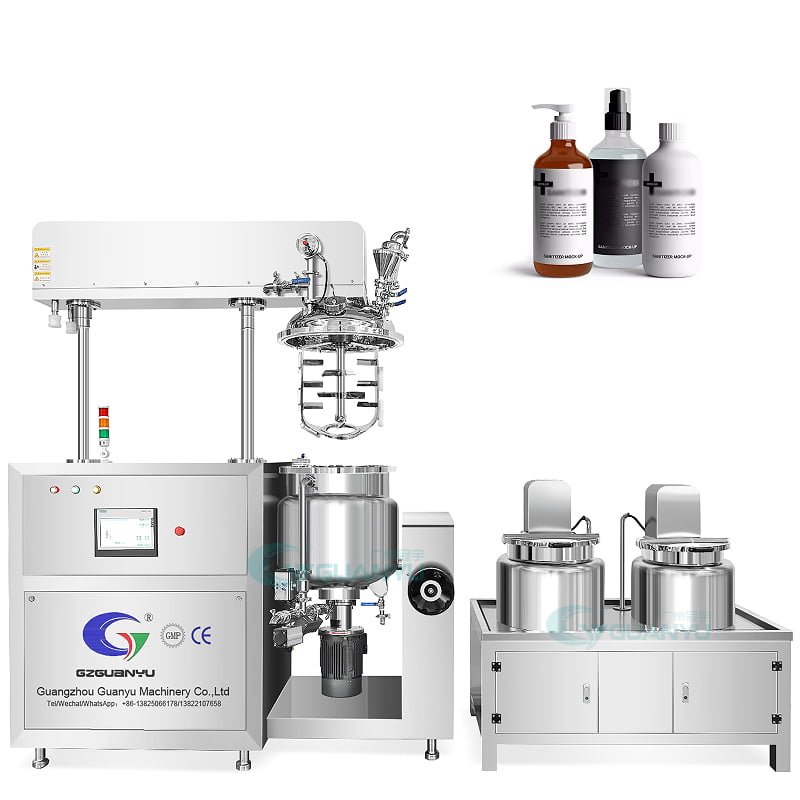
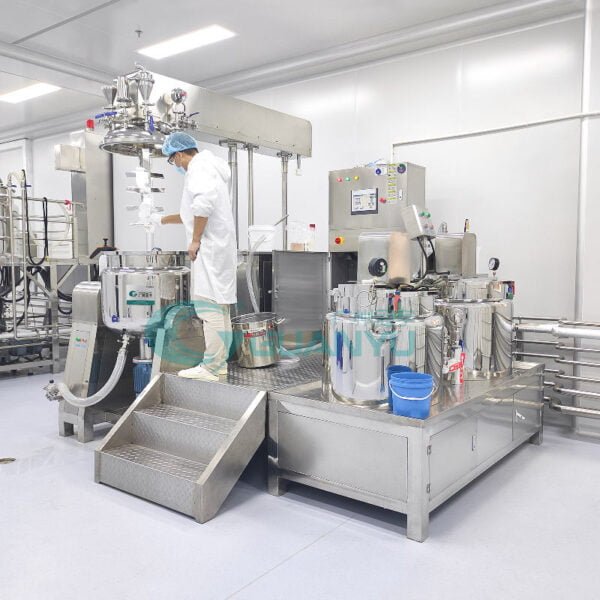
Use machines that are easy to clean. The Custom Making Machine from Guangzhou Guanyu uses stainless steel. It has mirror-polished surfaces and a multi-layer design. This makes cleaning simple and lowers contamination risks. The machine has a Clean-in-Place system. You can clean it without taking it apart. This saves time and keeps the process safe. Use these cleaning steps for every batch, including low-fat and healthy mayonnaise.
Staff Hygiene Practices
Train staff to follow strict hygiene rules. Poor hygiene is a big problem in food plants. Make sure everyone washes hands before starting. Staff must wear gloves, aprons, and hairnets. Set rules for entering the plant. Only trained staff should enter production areas. Hold regular training sessions on hygiene and sanitation. Talk about hygiene at monthly meetings. Check staff hygiene with regular testing and audits.
Common staff hygiene mistakes include:
Not washing hands before the process
Wearing dirty gloves or aprons
Touching face or hair during emulsification
Not following entry rules
Skipping training sessions
Stop these mistakes to keep mayonnaise safe. Develop special training for managers on good manufacturing practices and sanitation. Make hygiene a top priority at every step. This helps control contamination and keeps emulsification safe.
Dica: Good hygiene and regular testing protect your mayonnaise and your customers. Make hygiene part of your daily routine.
Use these protocols for every batch, diariamente. This keeps mayonnaise safe, alta qualidade, and ready for your customers.
Ensuring Quality and Compliance
Normas Regulamentadoras (FDA, USDA)
You have to follow strict rules when making mayonnaise. The FDA and USDA make these rules for food safety. These rules help keep mayonnaise safe for everyone. You need to check all ingredients for quality. You must test mayonnaise for bacteria and allergens. Every batch needs the right label. The FDA wants you to use safe eggs and oils. The USDA checks if your plant is clean. You must keep records of each step. This shows you follow the rules. When you follow these standards, you protect your customers and your business.
HACCP Implementation
You need to use HACCP to keep mayonnaise safe and good. HACCP means Hazard Analysis and Critical Control Points. This system helps you find risks and stop problems early. You must build a team to check every step. Look at the process and find where bacteria can grow. Set limits for temperature and pH. Check these limits every day. Fix problems fast if you find them. Keep records of every check.
Step Number | |
|---|---|
1 | Assemble the HACCP Team |
2 | Describe the Product |
3 | Identify Intended Use |
4 | Construct Process Flow Diagram |
5 | Verify Flow Diagram On-Site |
6 | Conduct Hazard Analysis |
7 | Determine Critical Control Points (CCPs) |
8 | Establish Critical Limits |
9 | Establish Monitoring Procedures |
10 | Establish Corrective Actions |
11 | Establish Verification Procedures |
12 | Establish Documentation & Records |
HACCP helps you keep every batch the same and safe. You make sure mayonnaise meets food safety rules.
Documentation and Records
Você deve keep records for every batch you make. Write down every test and every check. Track temperature, pH, and cleaning steps. Record allergen checks and ingredient quality. These records show you follow the rules. You need them for audits. Good records help you find problems fast. You use records to make quality better and keep it the same. Good records protect your customers and your plant.
Dica: Good records help you prove your mayonnaise is safe and high quality. You build trust with your customers and inspectors.
Scaling Up Mayonnaise Production Safely
When you make more mayonnaise, new problems can happen. You must keep food safety strong as you make more. Scaling up means you use more ingredients and more machines. You also need more workers. You must control each step to keep mayonnaise safe. If you do not change your safety steps, you can lose quality. Scaling up needs better machines, stronger checks, and smarter training.
Equipment Upgrades and Automation
Você precisa advanced machines when you make more mayonnaise. Machines must handle bigger batches and keep the same texture. The Custom Making Machine from Guangzhou Guanyu helps with this. You can change it to fit your plant’s needs. It uses stainless steel and is easy to clean. Automation lowers mistakes and keeps production steady. You get better control over mixing, temperatura, and timing. This keeps mayonnaise safe and keeps taste and texture the same. Upgrading machines helps you scale up without losing quality.
Monitorando Pontos Críticos de Controle
You must check every important step in your process. When you make more mayonnaise, you need sensors and real-time checks. SRV sensors measure how thick the emulsion is. This helps you keep the right texture. You can put sensors after cooling to check the final product. Real-time data lets you fix problems fast. You keep mayonnaise safe and meet your quality goals. Here are ways to check important points:
Use SRV sensors to check emulsion thickness.
Put sensors after cooling for end-product texture.
Watch sensor data in real time to adjust production.
These steps help you keep control as you make more mayonnaise.
Staff Training for Large-Scale Operations
You must train your team for bigger production. Making more mayonnaise means more people and more steps. Good training keeps everyone safe and keeps mayonnaise the same. You should teach equipment handling, process control, higiene, and teamwork. Hands-on workshops help staff learn ramp control shear. Teach them to control temperature and pH. This stops bacteria and keeps the right texture. Use this table to guide your training:
Foco no treinamento | Beneficiar |
|---|---|
Manuseio de Equipamentos | Menos avarias |
Controle de Processo | Qualidade consistente do produto |
Práticas de Higiene | Maionese mais segura |
Trabalho em equipe | Fluxo de trabalho mais rápido |
You keep your plant safe and efficient when you train your team well. Scaling up works best when your team knows what to do at every step.
Continuous Improvement in Food Safety
Ongoing Training and Engagement
You make food safety better by training your team often. Teach your staff about new risks in mayonnaise production. Hold short meetings every month. Use real stories from your plant to help learning. Ask questions and let staff share their thoughts. When everyone helps, you find problems sooner. This also makes your team feel proud of their work. Good training means people make fewer mistakes with mayonnaise. You can use surveys to see if your team understands food safety. These surveys show if there are problems before they get big.
Technology and Process Updates
Você make mayonnaise safer by using new machines and smart tools. Many plants now use automatic mayonnaise making machines. These machines help you make more mayonnaise with fewer mistakes. High-shear emulsifiers mix oils well, so mayonnaise stays smooth and safe. PLC-based dosing equipment measures each ingredient carefully. This stops spills and keeps recipes correct. CIP cleaning systems wash machines without taking them apart. This saves time and keeps everything clean. High-speed manufacturing lets you make more mayonnaise fast and safely.
Tecnologia | Descrição |
|---|---|
Automatic Mayonnaise Making Machines | These machines reduce errors, cut costs, and scale production efficiently. |
High-Shear Emulsifier (HSE) | Ensures fine and even emulsification of oils under vacuum conditions, enhancing product consistency. |
PLC-based Dosing Equipment | Allows precise measurement of ingredients, minimizing human error and spills. |
CIP Cleaning Systems | Automated cleaning reduces contamination risks and cleaning time, improving hygiene. |
High-Speed Manufacturing | Increases output and reduces labor requirements, enhancing overall production efficiency. |
Reviewing and Updating Protocols
You need to check your mayonnaise safety steps often. Review your cleaning, Mistura, and storage rules every few months. Use both lagging and leading indicators to see how you are doing. Lagging indicators show past problems, like recalls or complaints. Leading indicators, like sanitation checks, help you stop problems before they start. Internal audits get you ready for outside checks. You should also watch for new trends in mayonnaise safety. Focus on pH control, stable emulsification, and clean raw materials. Always use safe water and good ingredients. Change your protocols when you find better ways to keep mayonnaise safe.
Dica: Always try to get better to keep your mayonnaise safe and your customers happy. Keep learning and updating your process.
You can keep mayonnaise safe if you follow hygiene steps. Usar advanced machines and train your team well. Experts say you should do these things:
Pasteurize to kill bad bacteria in mayonnaise.
Test mayonnaise for texture, pH, and taste before packing.
Clean machines often so germs do not spread.
Misturadores avançados and vacuum emulsifying machines help make mayonnaise smooth and safe. Train your staff often and follow the rules. This lowers risks and makes mayonnaise better. Always use best practices and try to make mayonnaise safer every day.
Practice | Beneficiar |
|---|---|
Pasteurized eggs and GMPs | Lower E. Coli risk in mayonnaise |
Strong hygiene and inspections | Better mayonnaise safety and quality |
Perguntas frequentes
What is the best way to store mayonnaise in a plant?
You should keep mayonnaise at or below 41°F. This stops bacteria from growing. Use sealed containers. Check the temperature often. Good storage keeps mayonnaise safe and fresh.
How often should you clean equipment used for mayonnaise?
You need to clean all equipment after every batch. This removes oil and germs. Use hot water and food-safe cleaners. Clean-in-Place systems help you save time and keep mayonnaise safe.
Why is pH control important in mayonnaise production?
You must control pH to stop bacteria. Mayonnaise needs a low pH. Vinegar or lactic acid helps keep pH low. Test pH during each batch. Safe pH keeps mayonnaise good for longer.
How do you prevent allergen cross-contact in mayonnaise plants?
You should keep ingredients apart. Use separate tools for each allergen. Label everything clearly. Train your team to follow allergen rules. This keeps mayonnaise safe for everyone.
What are the main risks when making mayonnaise?
You face risks like bacteria, poor ingredient quality, and allergens. Dirty tools or hands can spread germs. You must check every step. Good habits and clean machines protect your mayonnaise.